
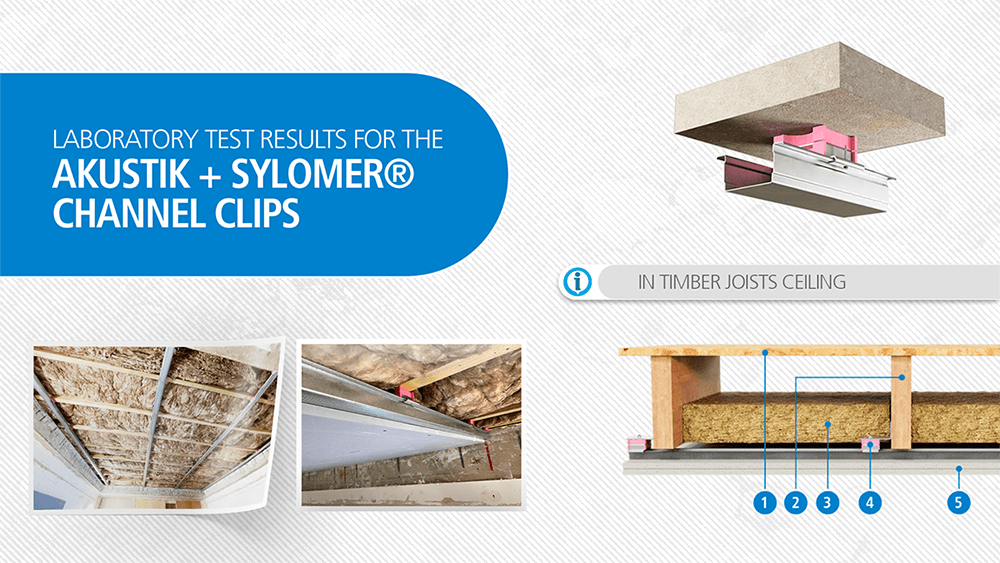
AKUSTIK + SYLOMER® CHANNEL CLIPS IN TIMBER JOISTS CEILING
INTRODUCTION
The laboratory tests are carried out in a laboratory of Sound Research Laboratories (SRL) at Holbrook House, Sudbury, UK.
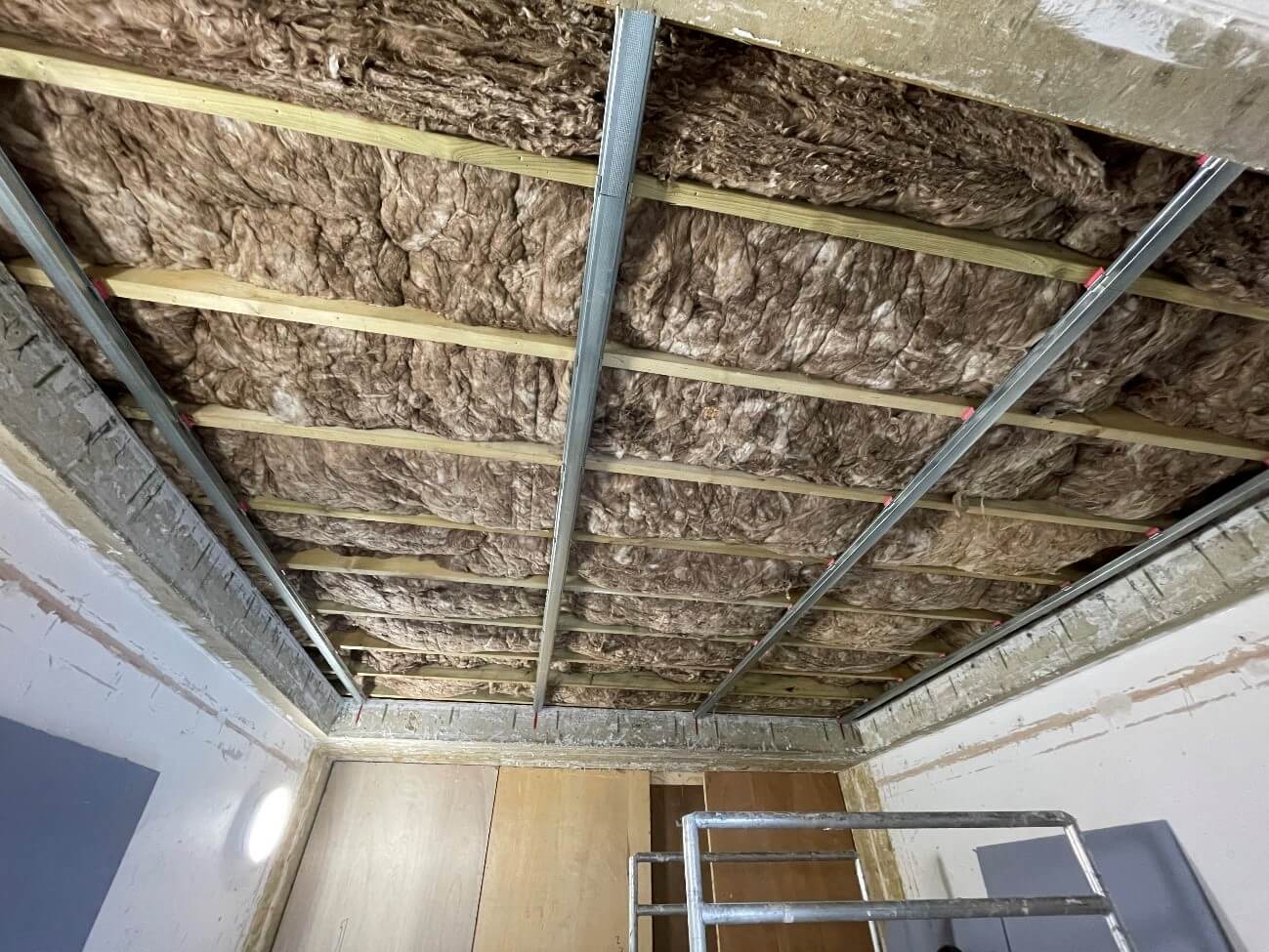
Impact and airborne noise tests are performed with different solutions of suspended ceilings (both rigid and elastic).
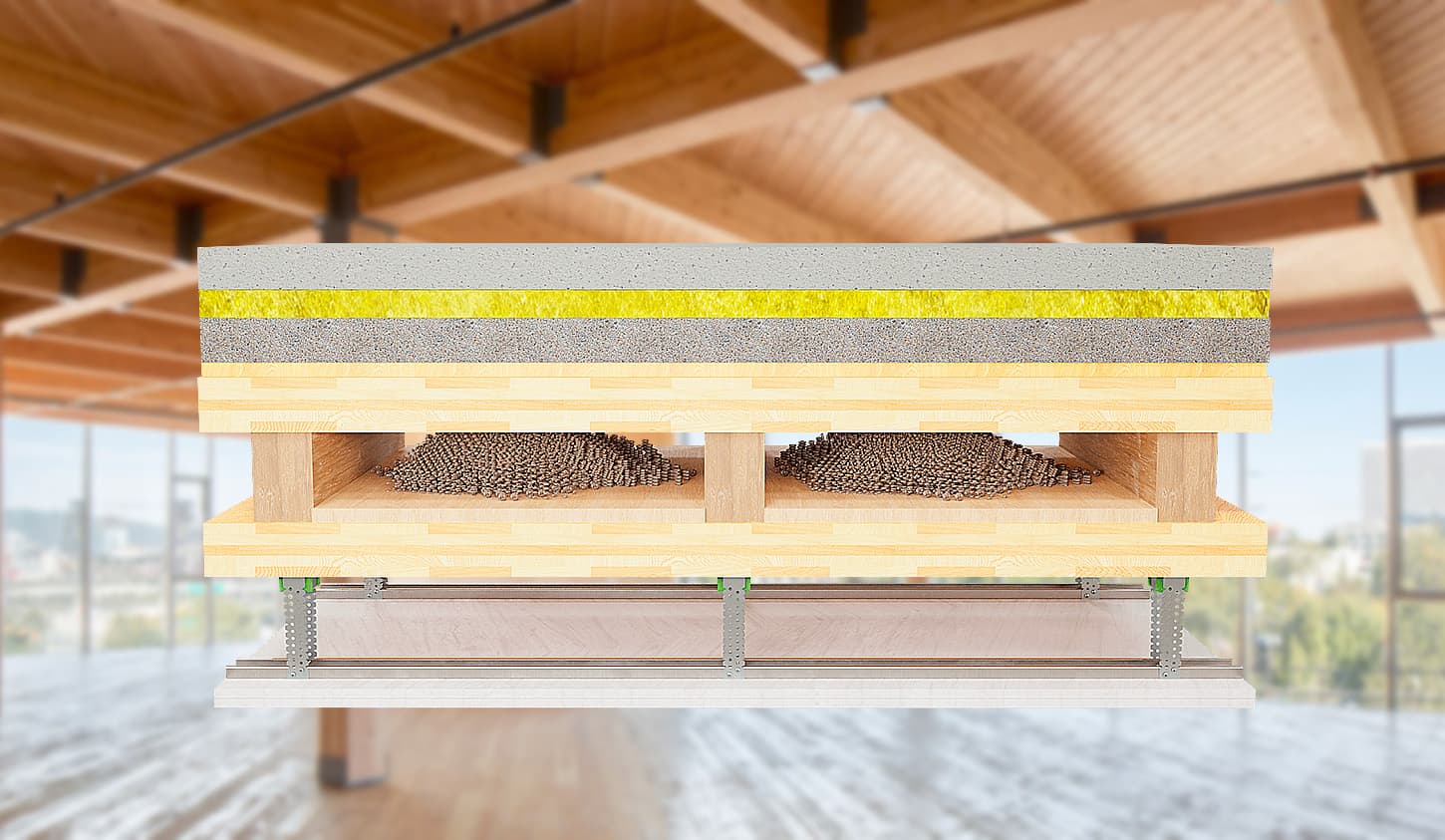
In general, timber structures are harder to acoustically isolate due to their lower mass compared to concrete structures. Due to this, the proper selection of acoustic insulation products becomes more critical.
TESTED CONFIGURATIONS:
- Several different configurations have been tested, using 2 different ceiling suspension systems:
- Rigid suspension
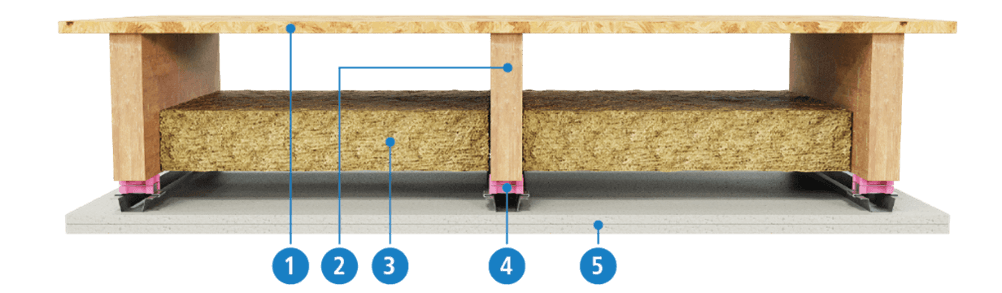
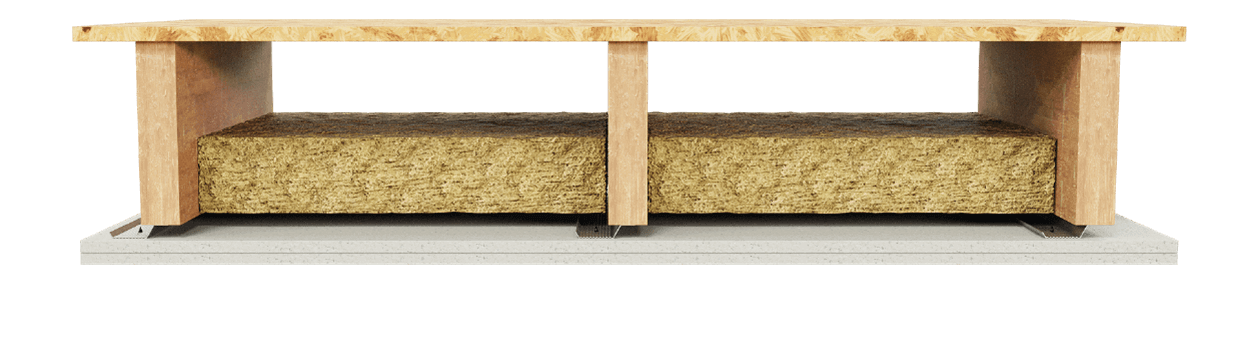
- Elastic Akustik + Sylomer® Channel Clip Suspension
All solutions are compact solutions that imply very little loss of living volume.
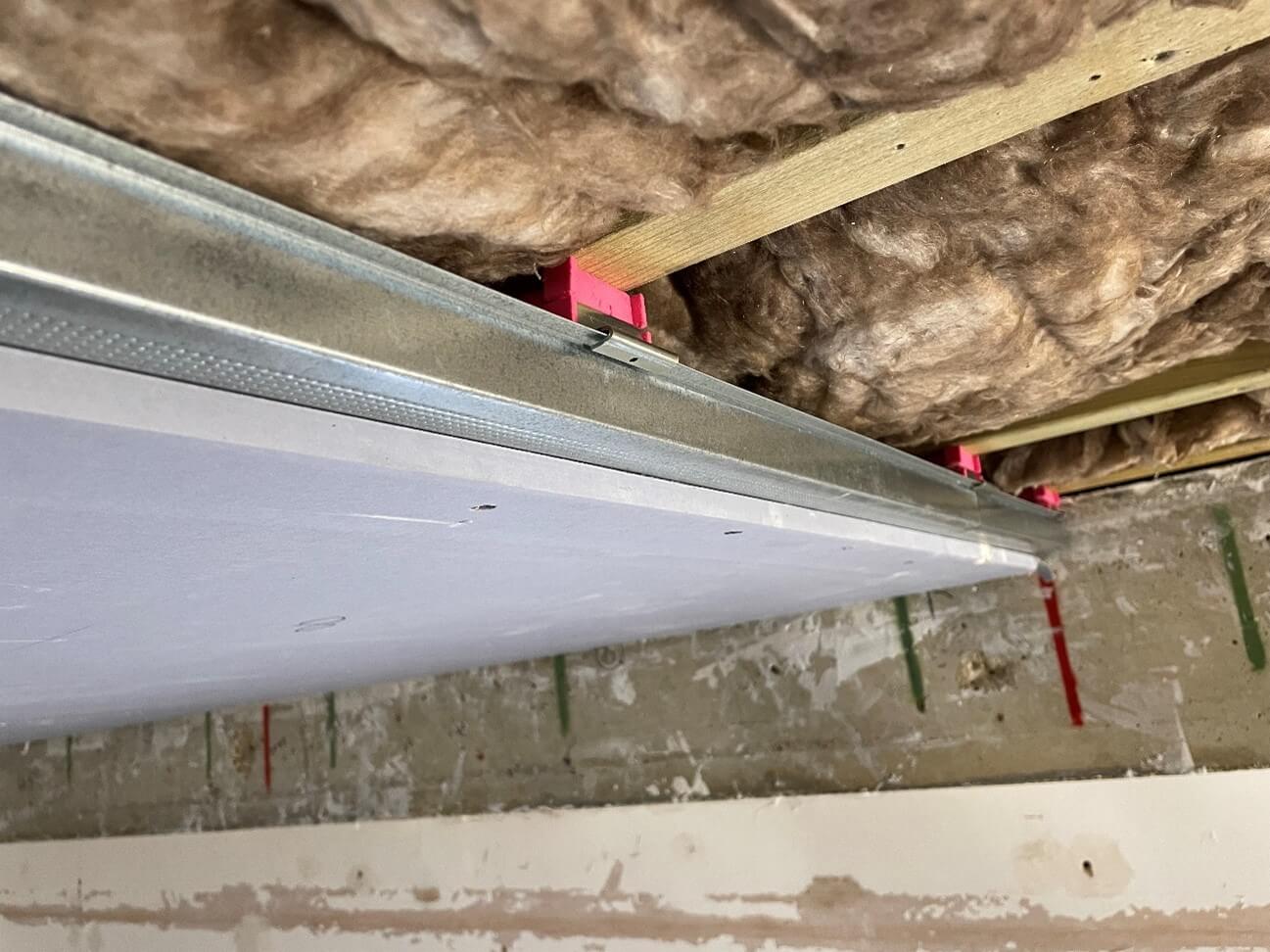
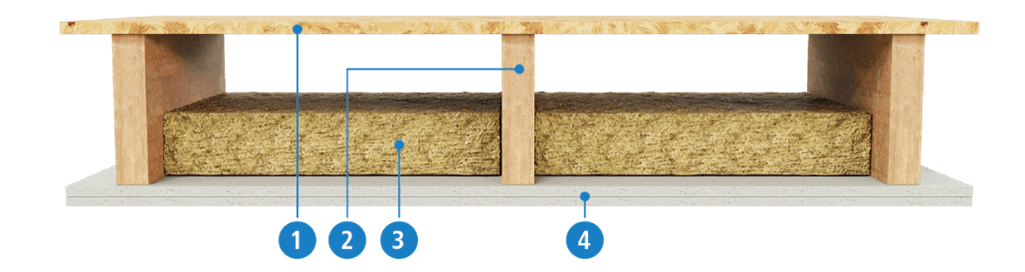
The configurations teste are detailed below:
| Configuration | Scheme | Description |
|---|---|---|
| A |
|
|
| C |
|
Natural frequency: 9,4Hz |
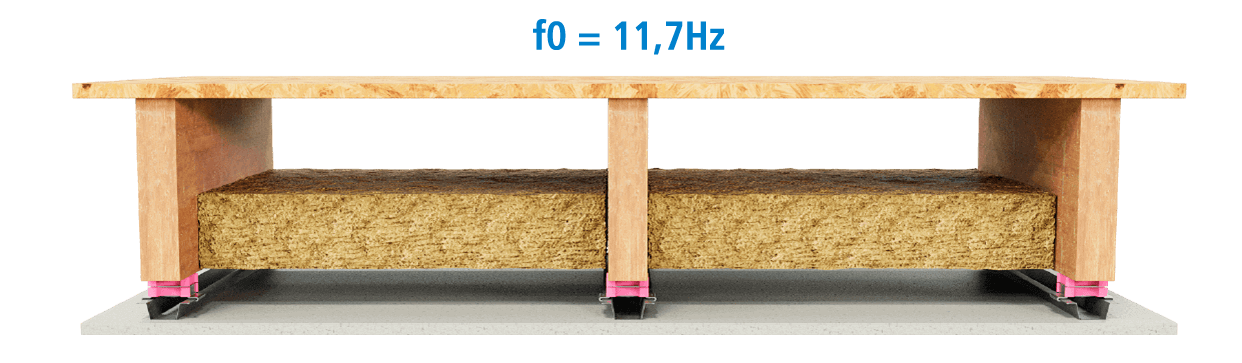
| D |
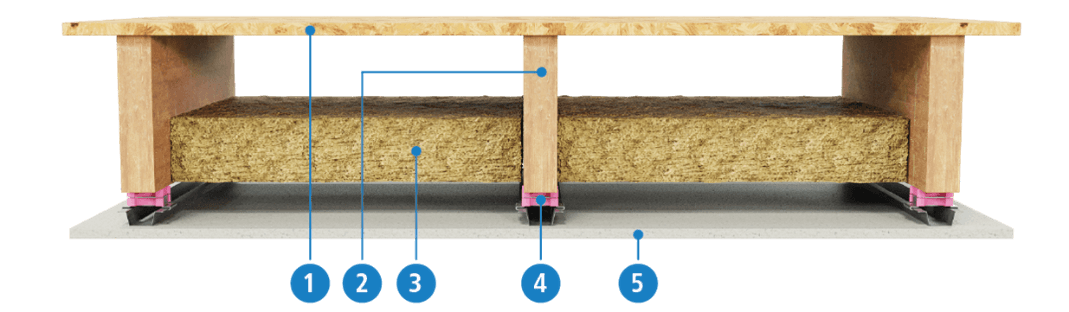
|
Natural frequency: 11,7Hz |
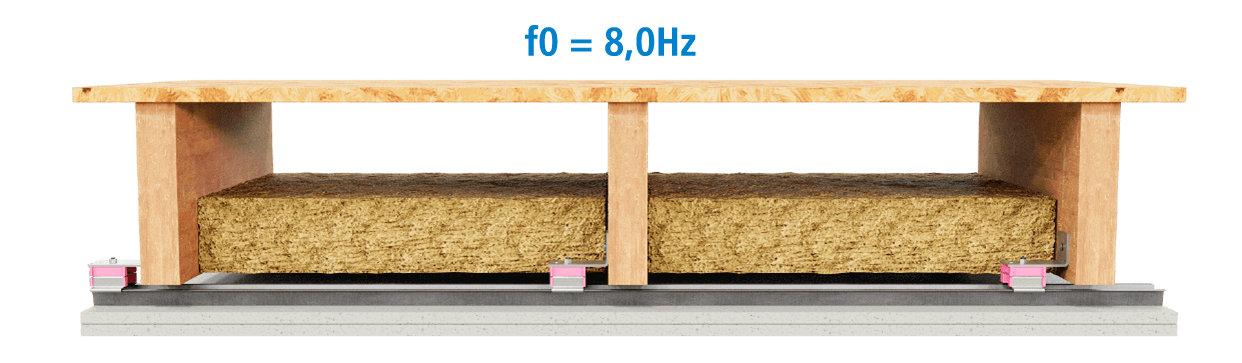
| E |
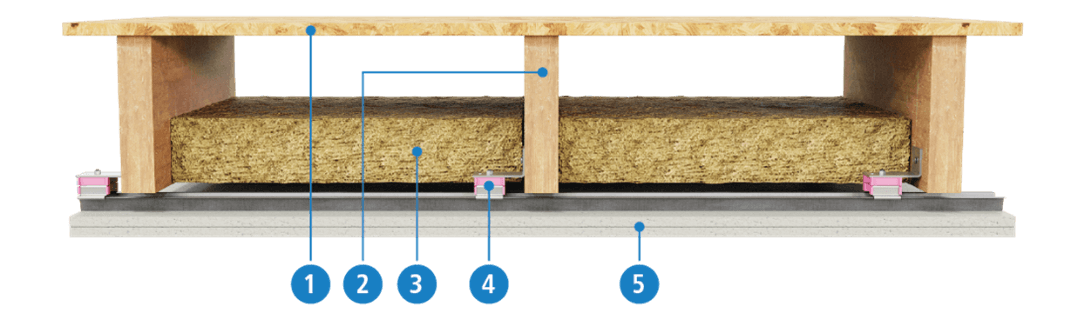
|
Natural frequency: 8,0Hz |
| F |
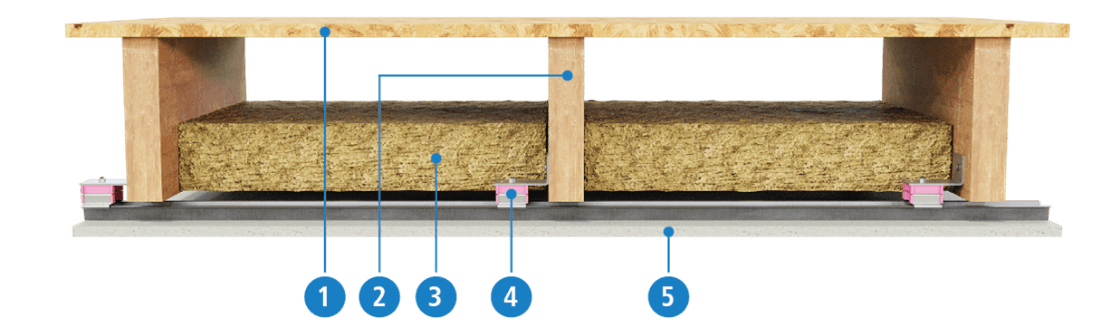
|
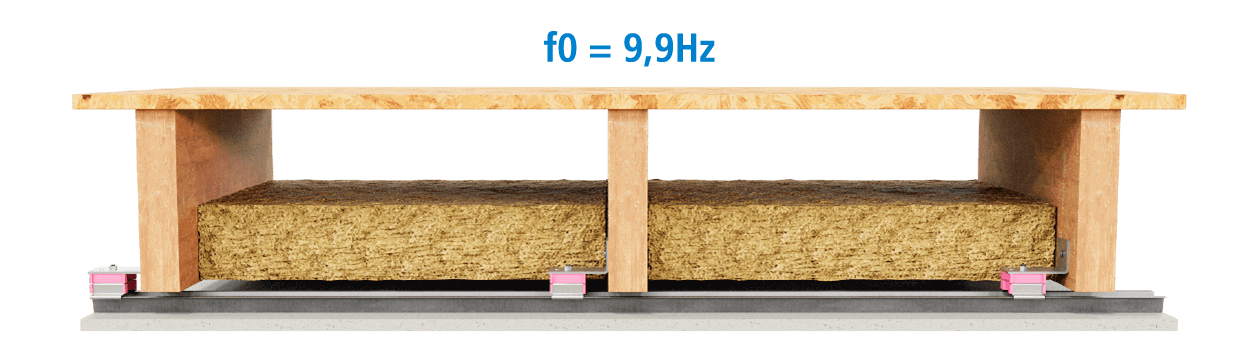
Natural frequency: 9,9Hz |
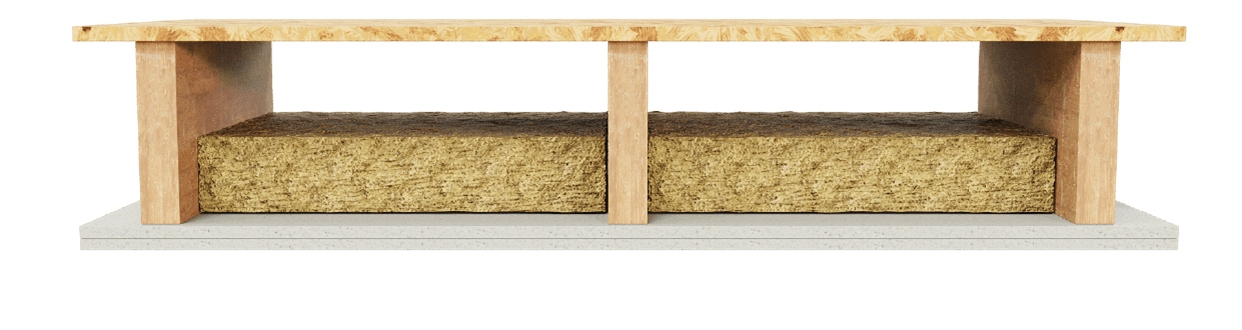
This way, the acoustic performance of an acoustic ceiling suspended with different configurations can be compared to each other. The results of the acoustic tests with each configuration are shown below:
| Configuration A | |||
|---|---|---|---|
|
|||
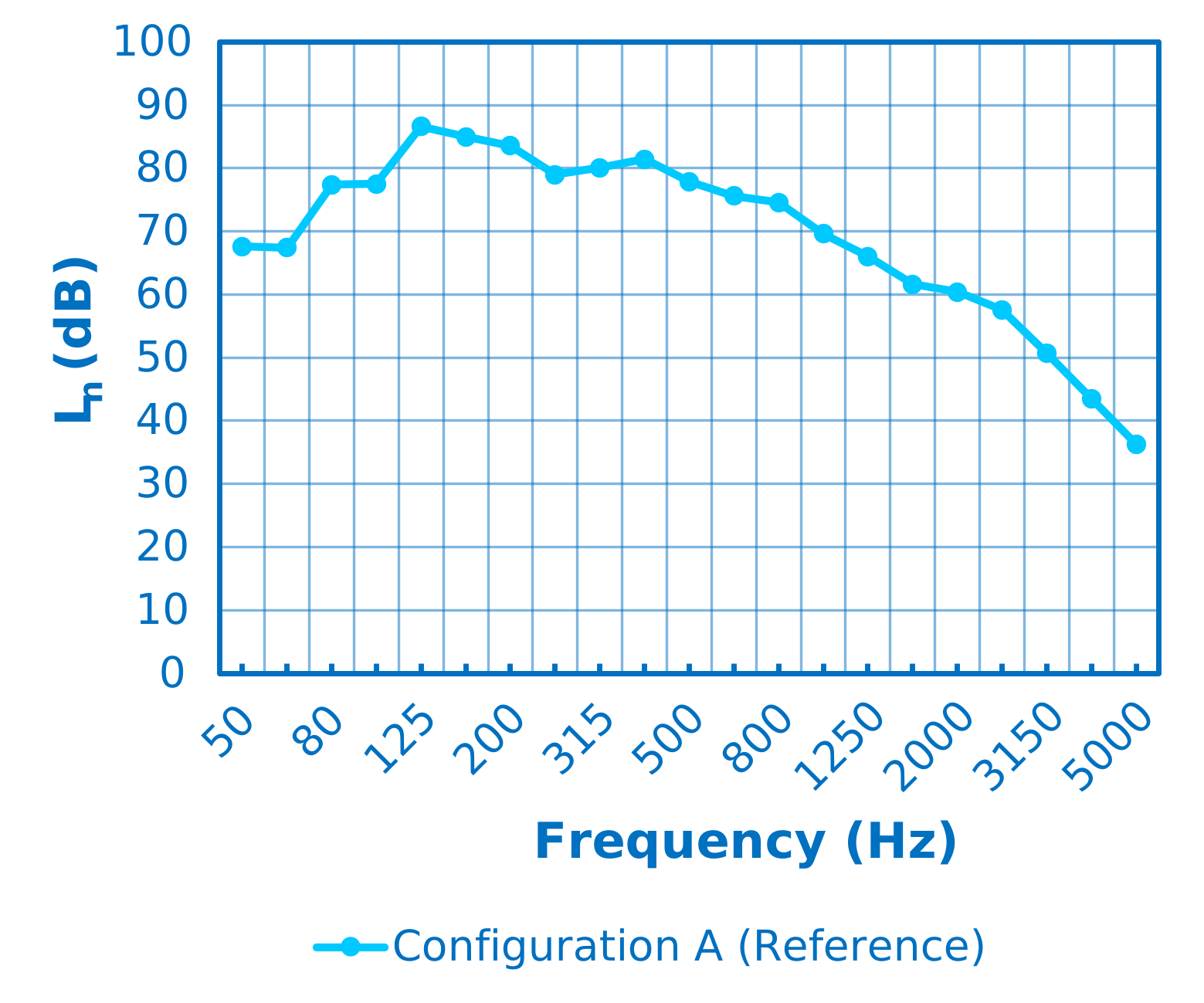
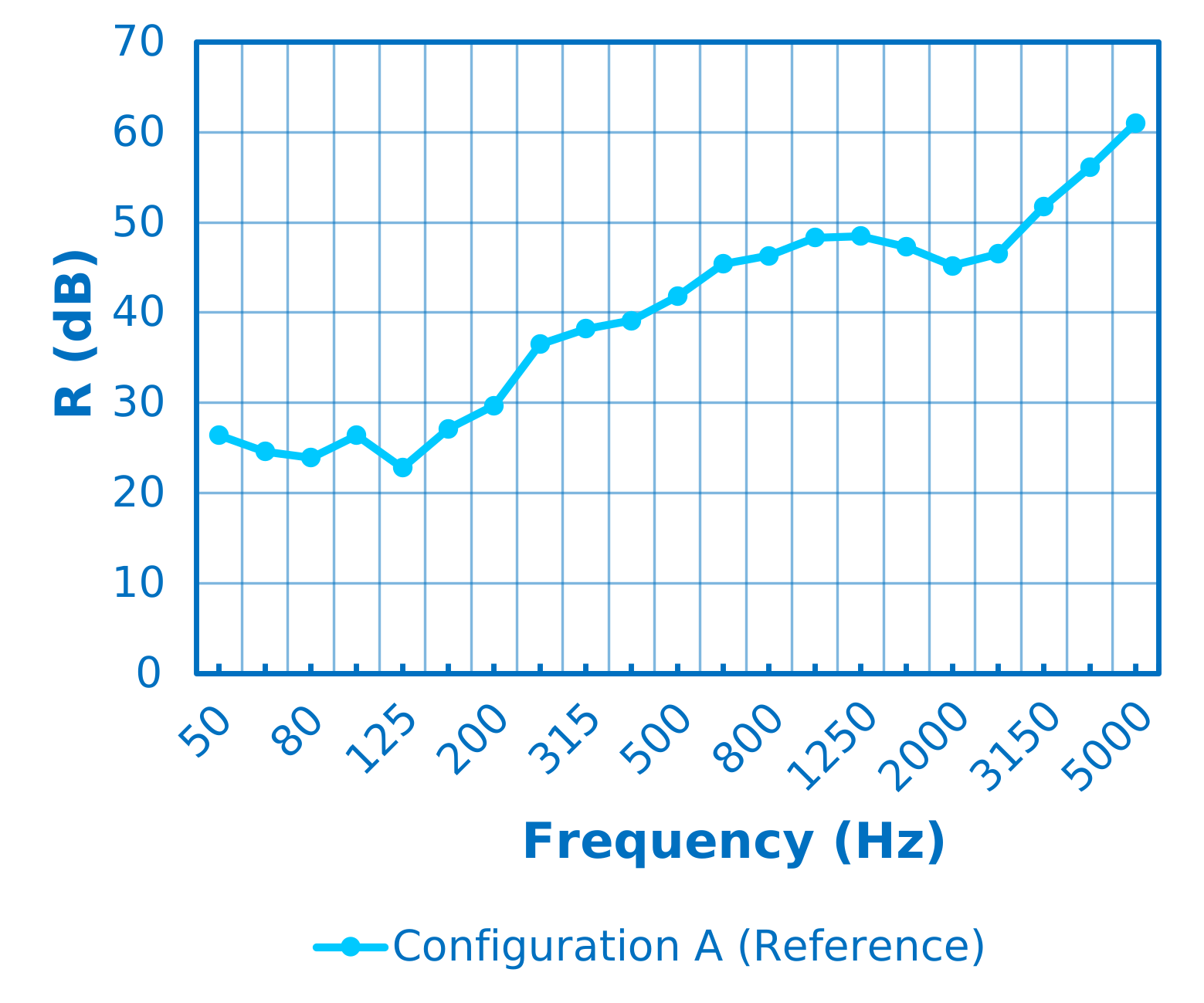
| Impact noise results – calculated according to BS EN ISO 10140-3:2021 | Airborne noise results - calculated according to BS EN ISO 10140-2:2021 | ||
|
|
||
| Ln,w: 76 dB | IIC 34 | RW: 44 dB | STC 44 |
| Go to Impact Noise Results Report Ln (PDF) | Go to Airbone Noise Results Report R (PDF) | ||
| Configuration B | |||
|---|---|---|---|
|
|||
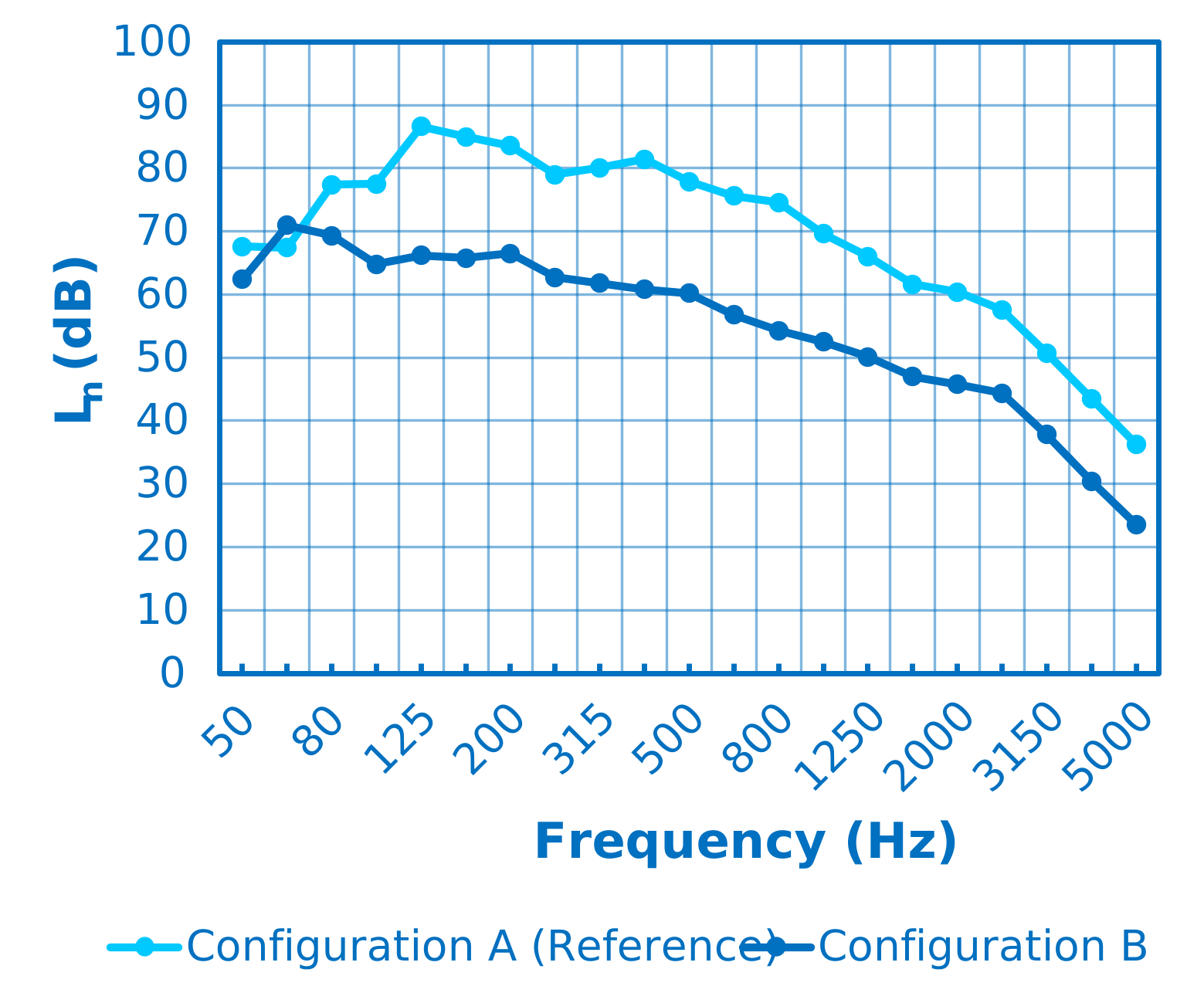
| Impact noise results – calculated according to BS EN ISO 10140-3:2021 | Airborne noise results - calculated according to BS EN ISO 10140-2:2021 | ||
|
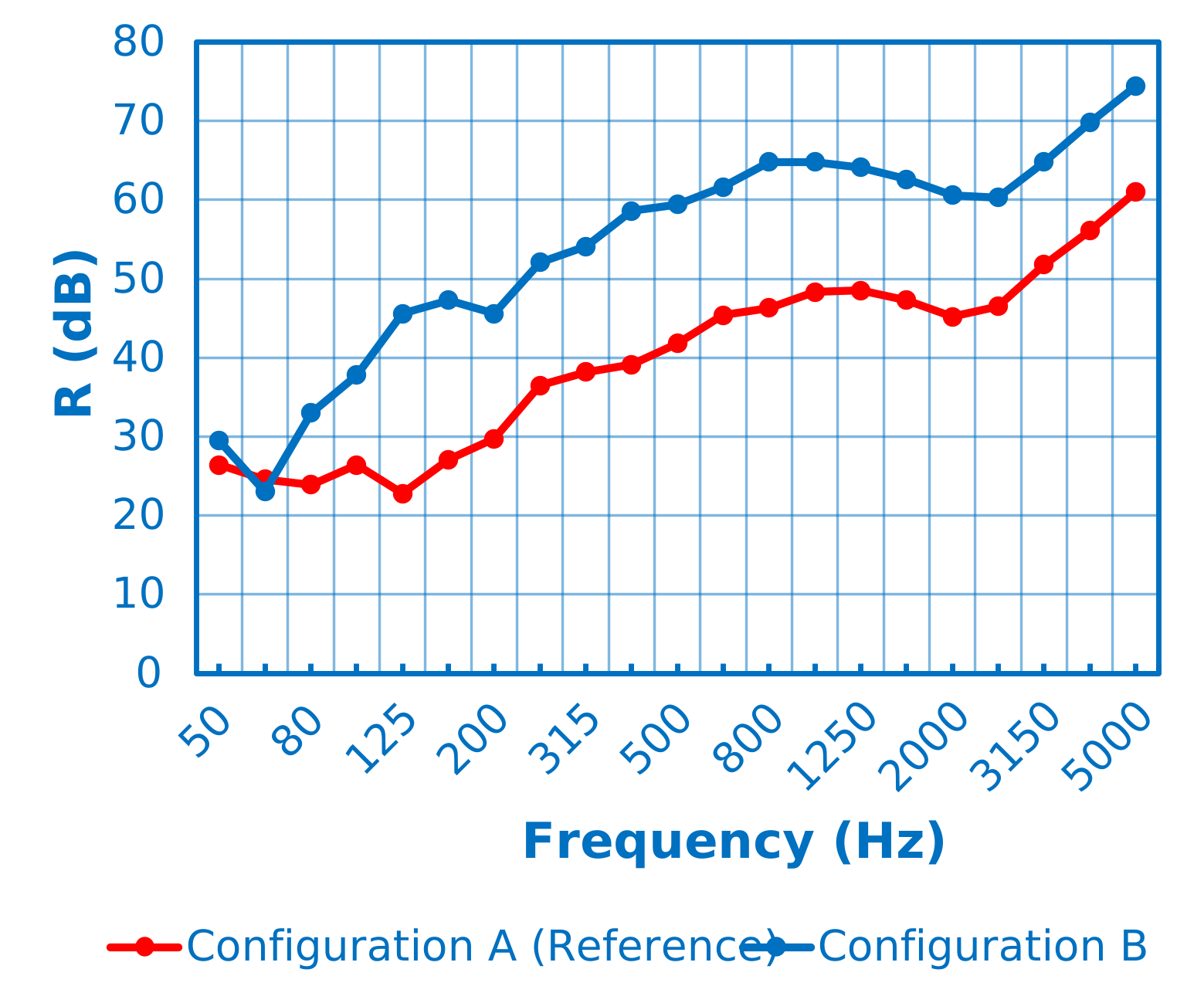
|
||
| Ln,w: 59 dB | IIC 51 | RW: 61 dB | STC 61 |
| Go to Impact Noise Results Report Ln (PDF) | Go to Airbone Noise Results Report R (PDF) | ||
| Configuration C | |||
|---|---|---|---|
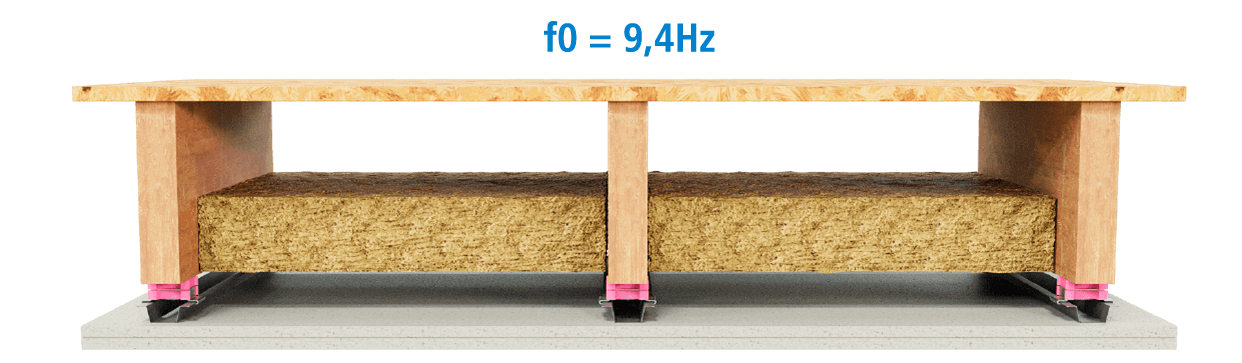
|
|||
| Impact noise results – calculated according to BS EN ISO 10140-3:2021 | Airborne noise results - calculated according to BS EN ISO 10140-2:2021 | ||
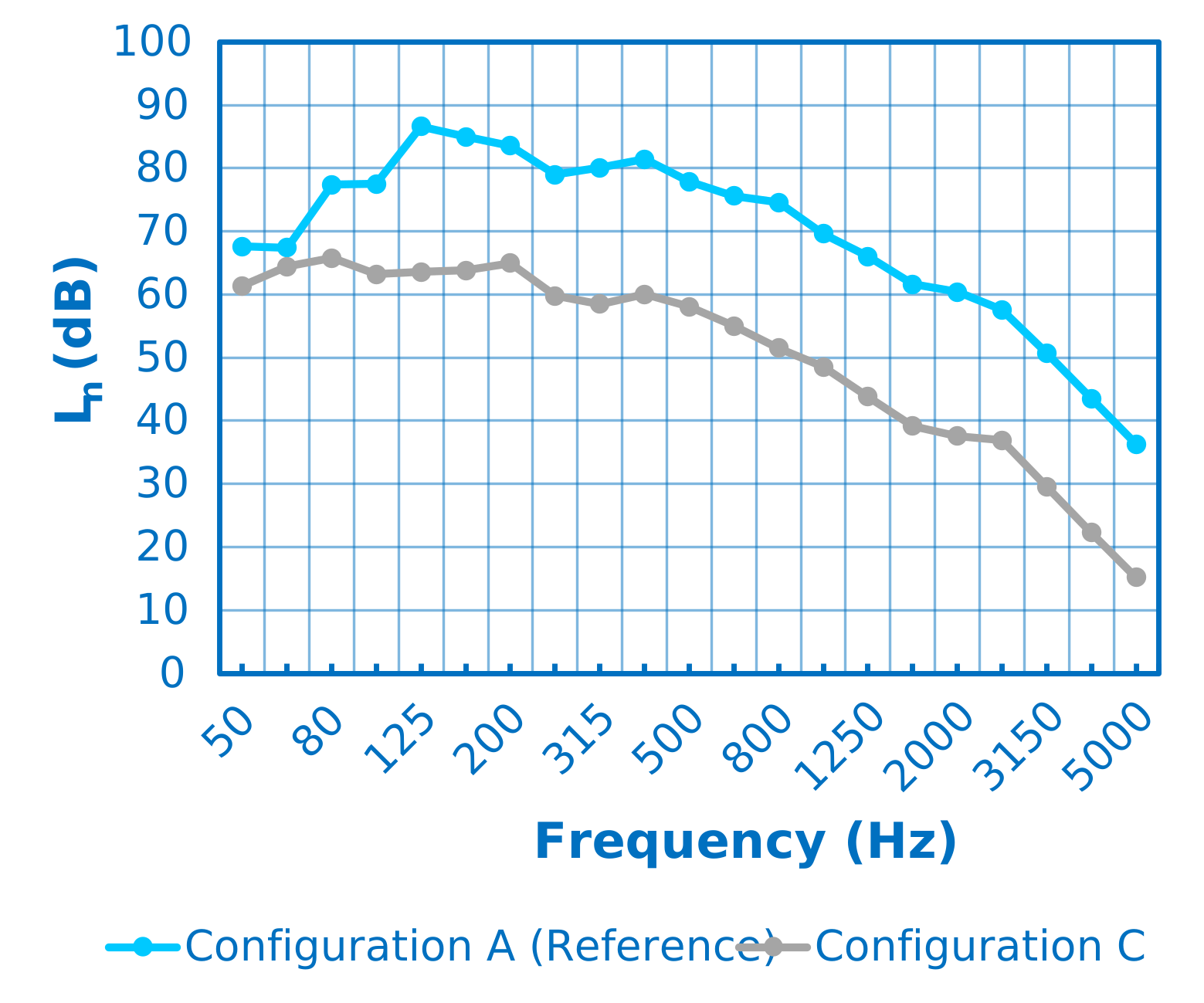
|
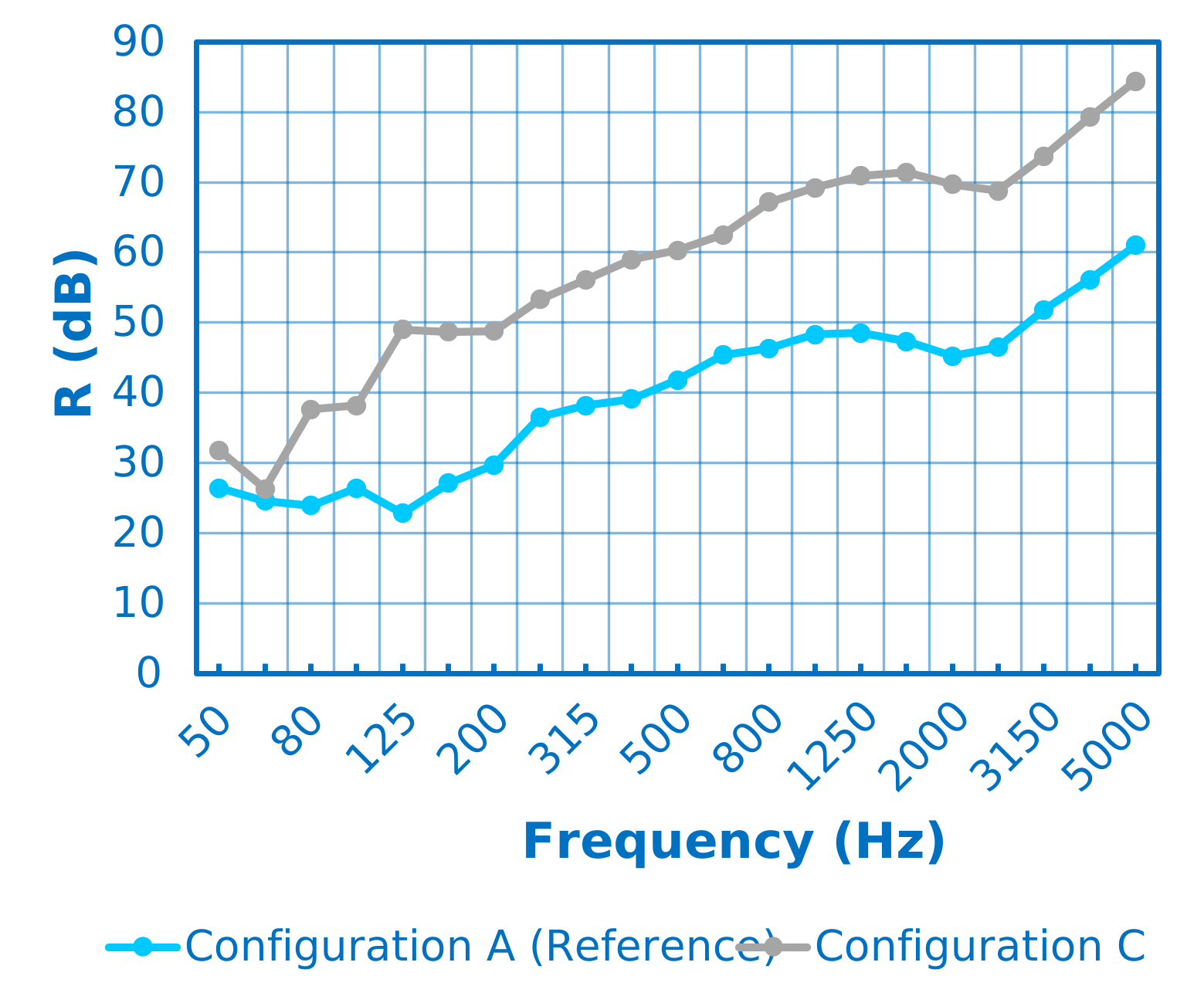
|
||
| Ln,w: 56 dB | IIC 54 | RW: 63 dB | STC 64 |
| Go to Impact Noise Results Report Ln (PDF) | Go to Airbone Noise Results Report R (PDF) | ||
| Configuration D | |||
|---|---|---|---|
|
|||
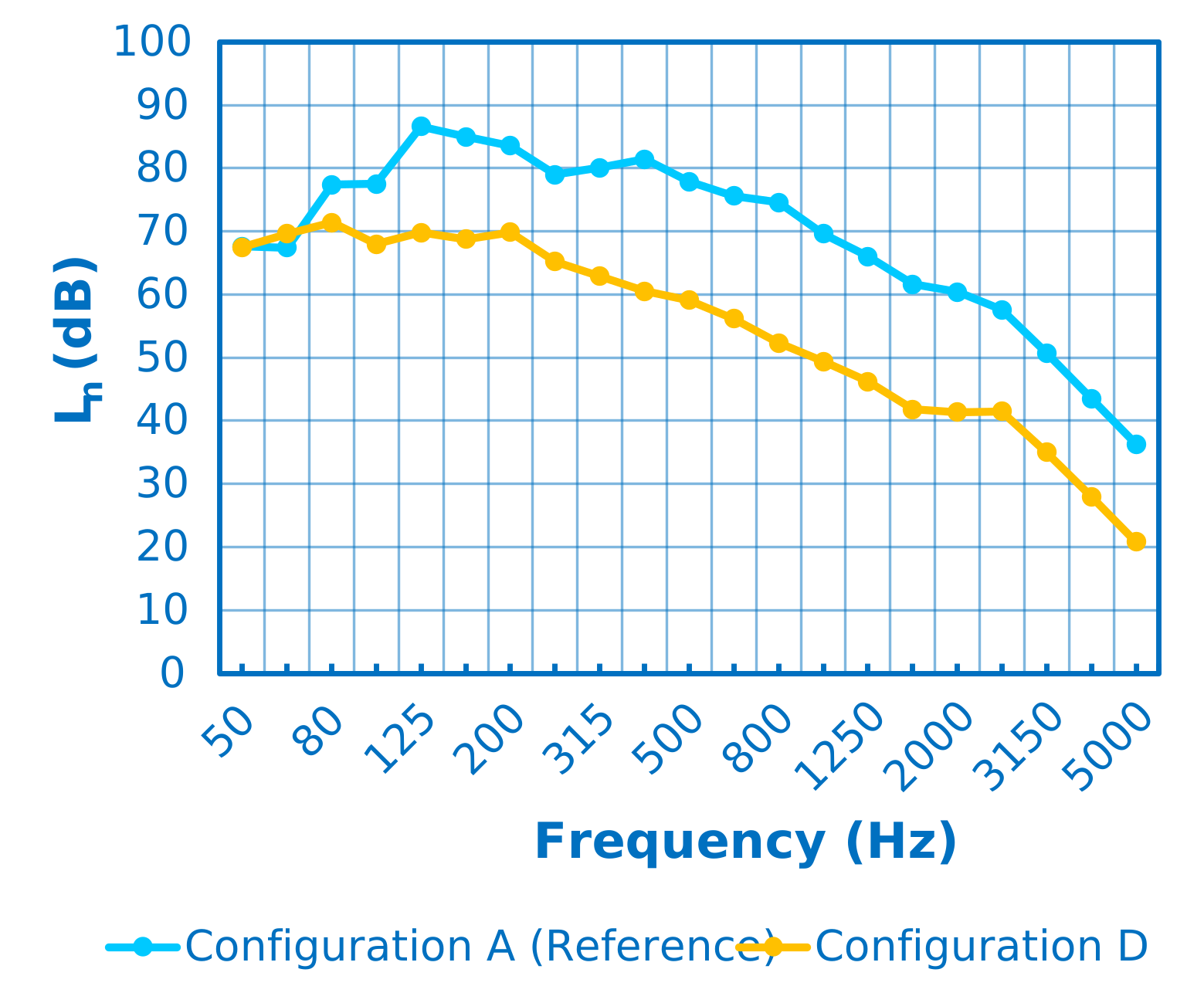
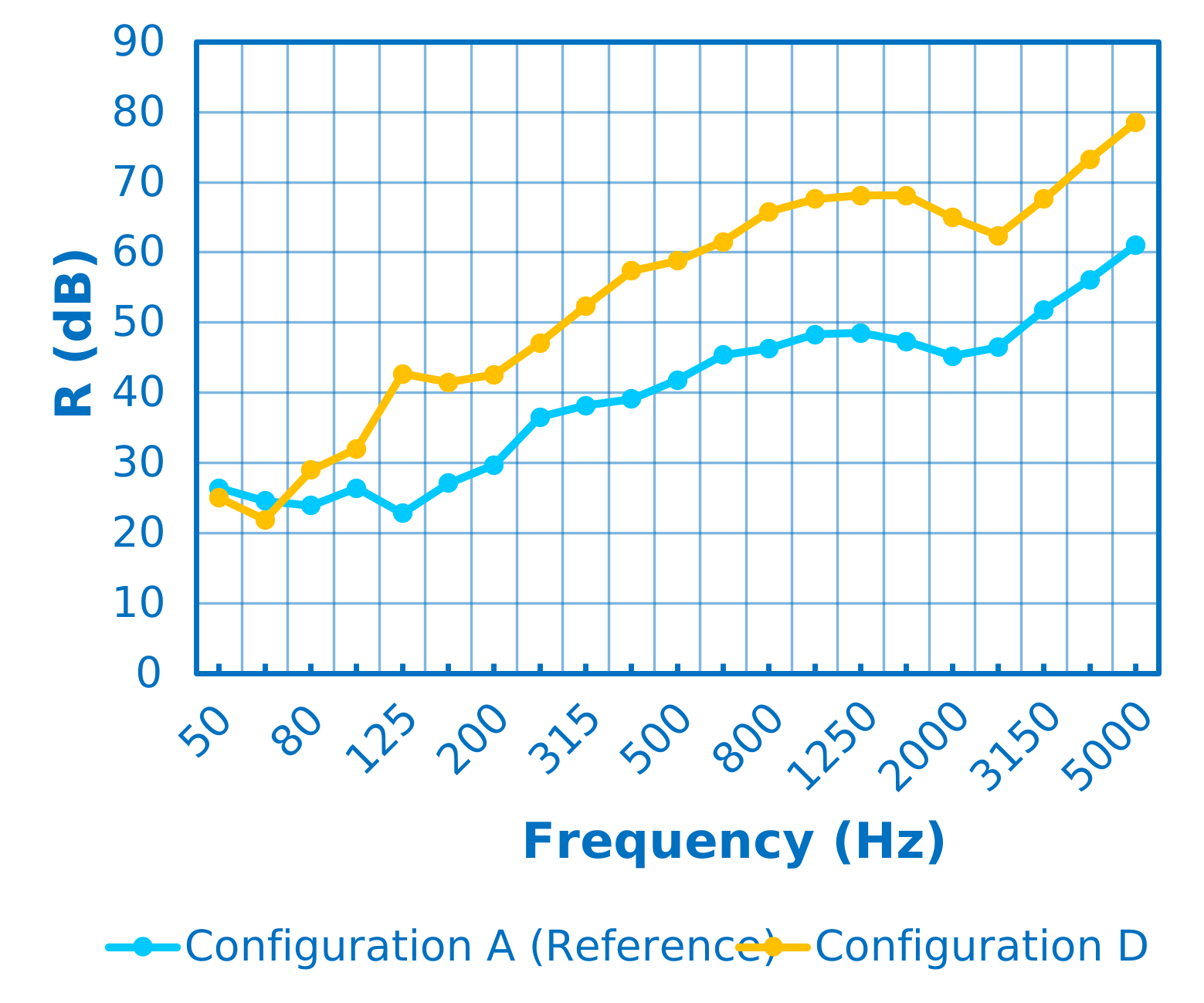
| Impact noise results – calculated according to BS EN ISO 10140-3:2021 | Airborne noise results - calculated according to BS EN ISO 10140-2:2021 | ||
|
|
||
| Ln,w: 61 dB | IIC 49 | RW: 59 dB | STC 60 |
| Go to Impact Noise Results Report Ln (PDF) | Go to Airbone Noise Results Report R (PDF) | ||
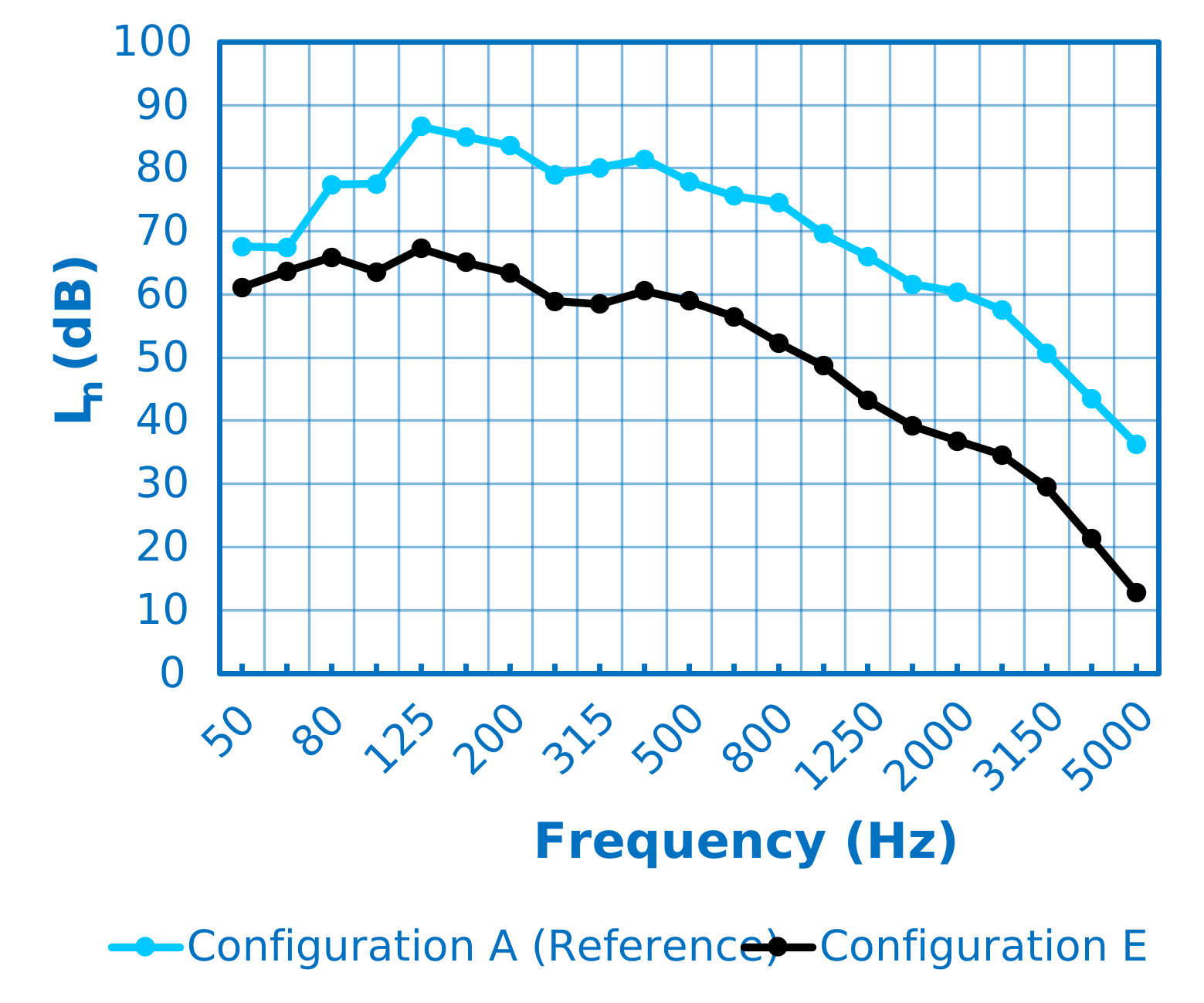
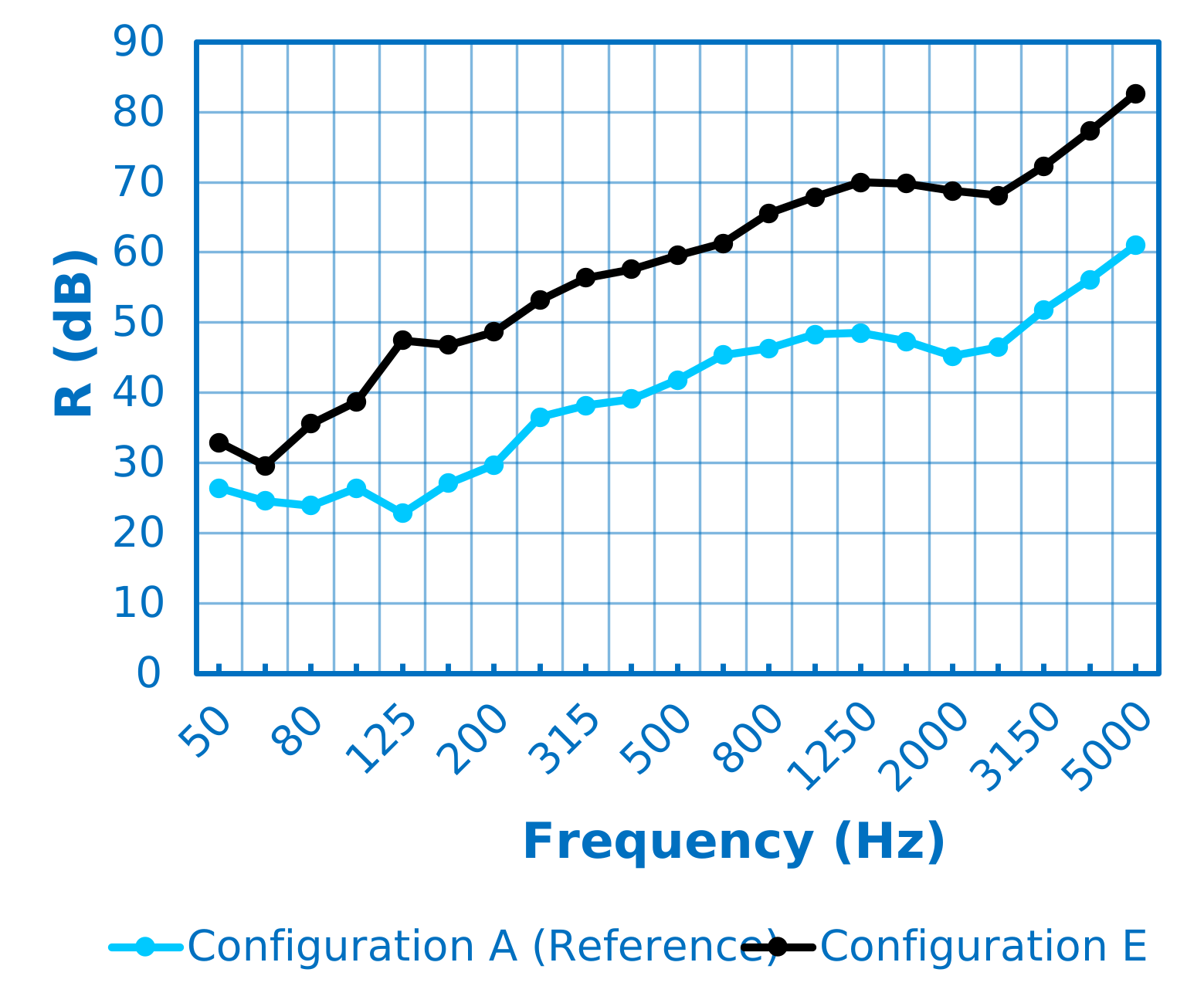
| Configuration E | |||
|---|---|---|---|
|
|||
| Impact noise results – calculated according to BS EN ISO 10140-3:2021 | Airborne noise results - calculated according to BS EN ISO 10140-2:2021 | ||
|
|
||
| Ln,w: 57 dB | IIC 53 | RW: 63 dB | STC 64 |
| Go to Impact Noise Results Report Ln (PDF) | Go to Airbone Noise Results Report R (PDF) | ||
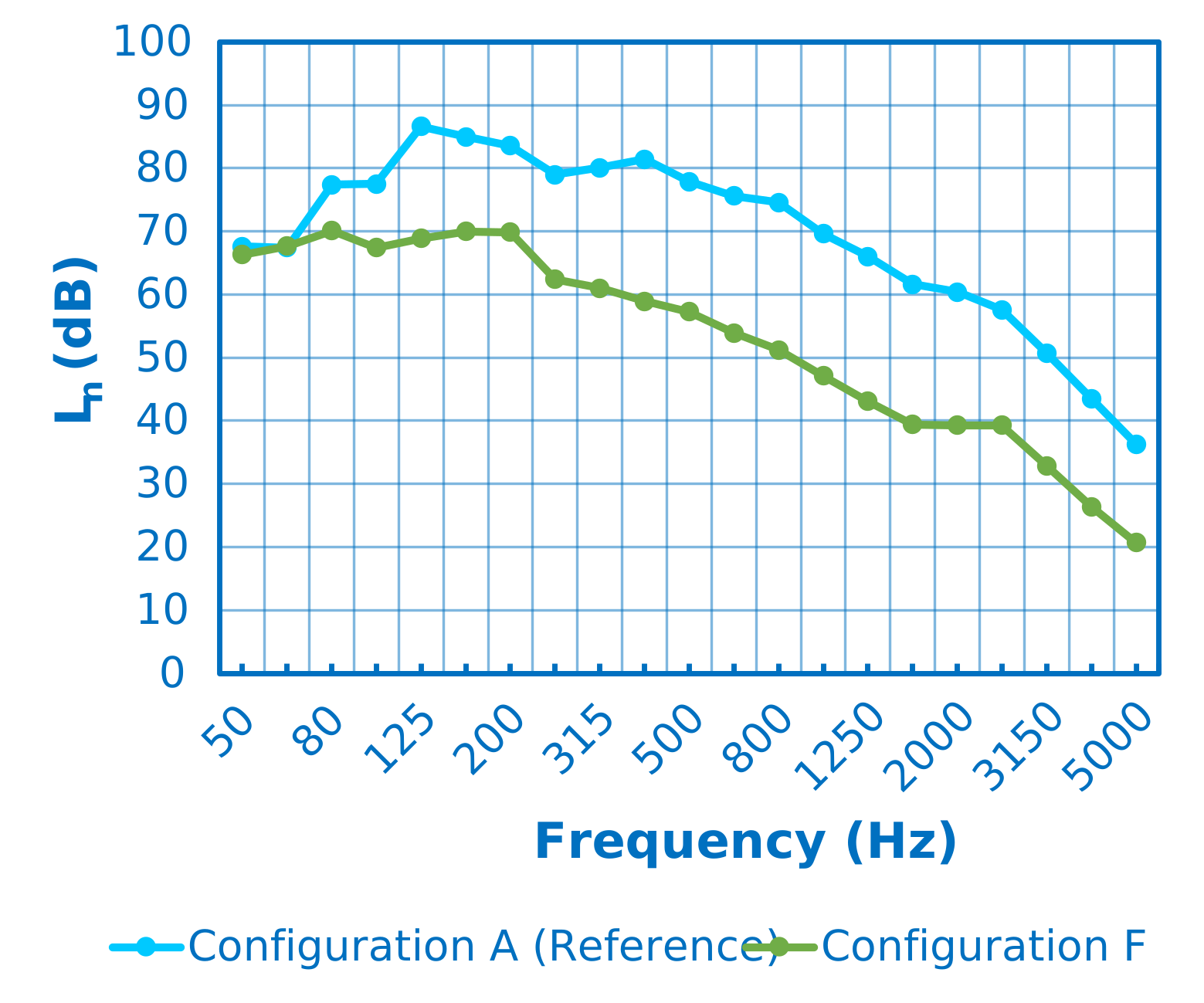
| Configuration F | |||
|---|---|---|---|
|
|||
| Impact noise results – calculated according to BS EN ISO 10140-3:2021 | Airborne noise results - calculated according to BS EN ISO 10140-2:2021 | ||
|
|
||
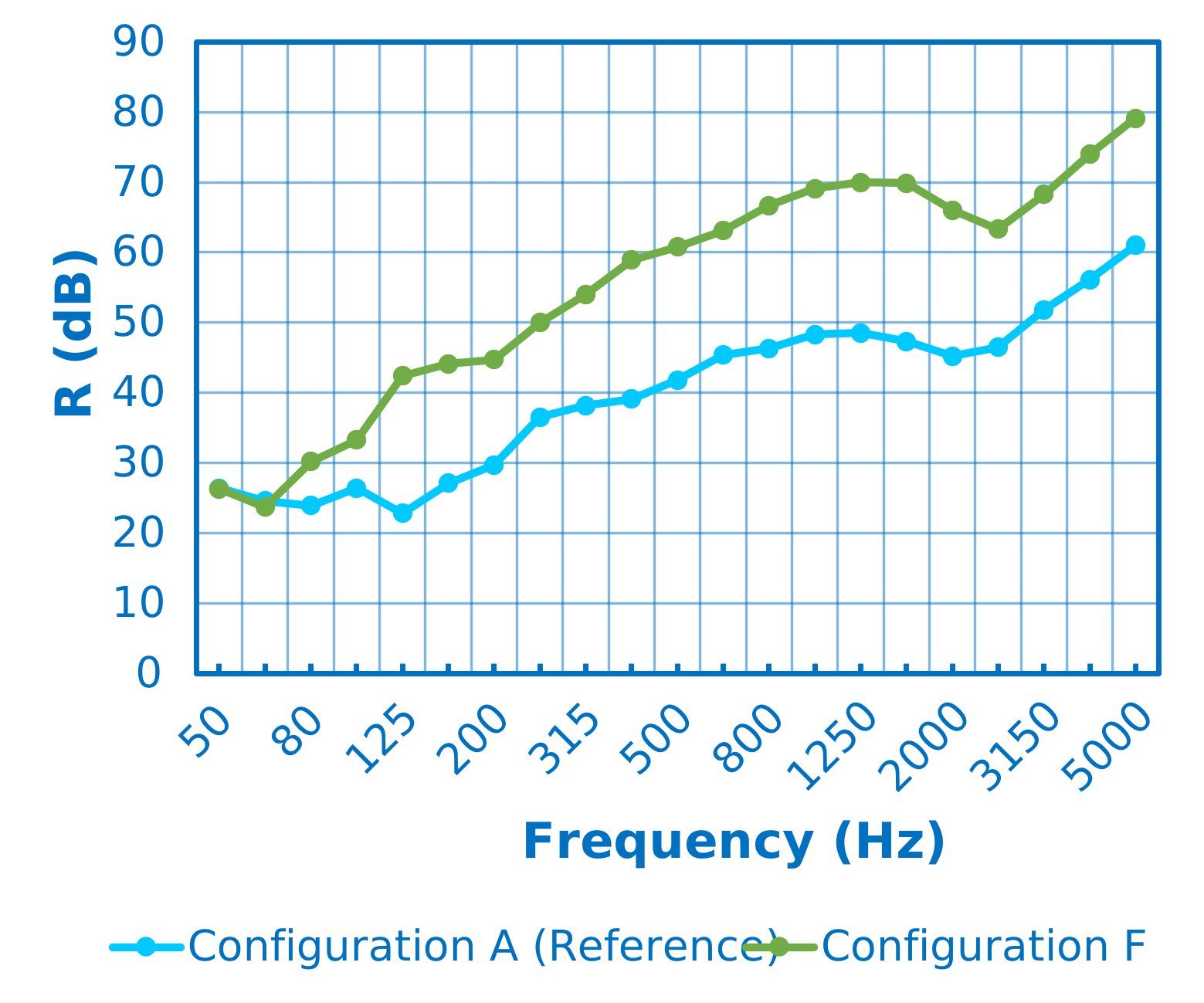
| Ln,w: 60 dB | IIC 50 | RW: 61 dB | STC 62 |
| Go to Impact Noise Results Report Ln (PDF) | Go to Airbone Noise Results Report R (PDF) | ||
| OVERVIEW | |
|---|---|
|
|
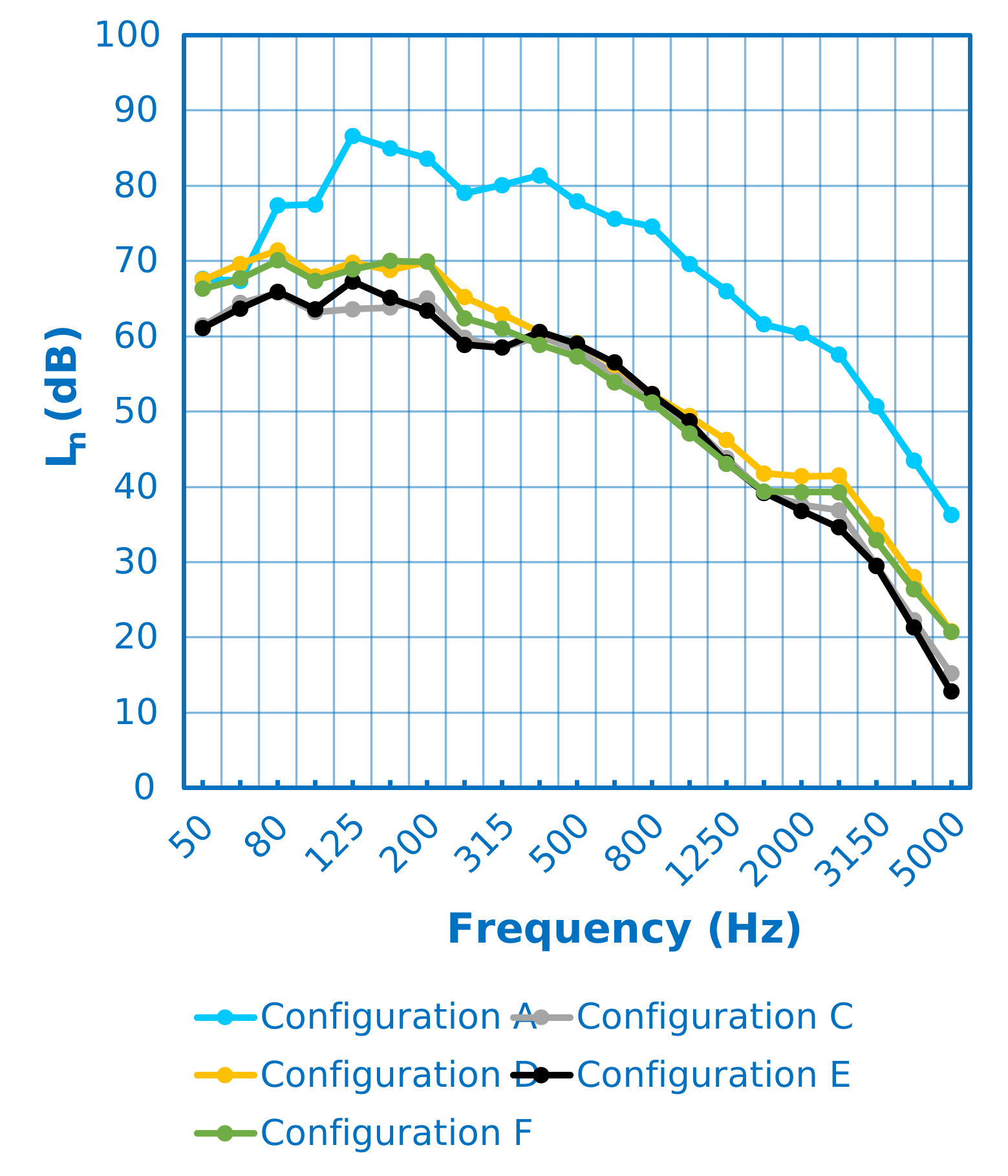
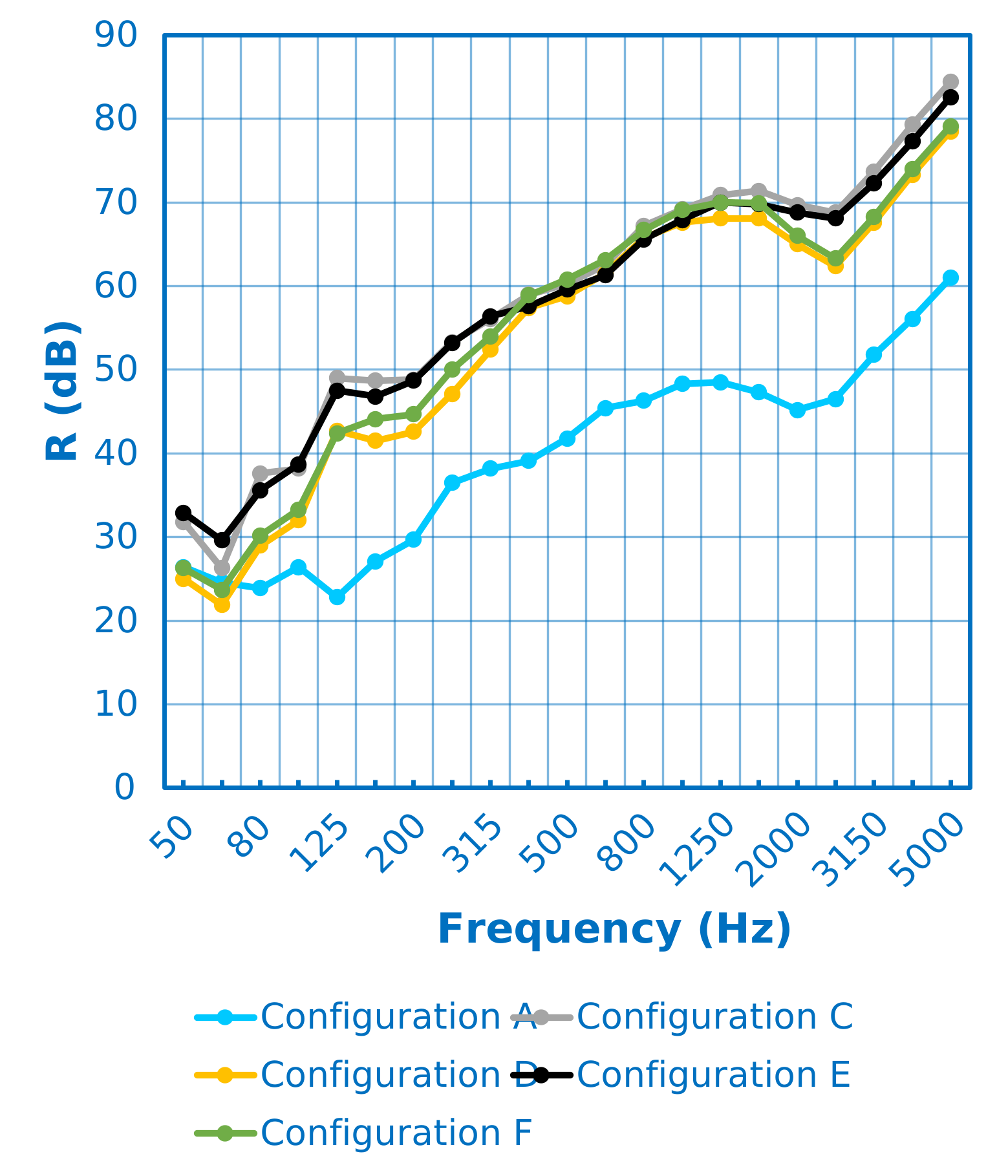
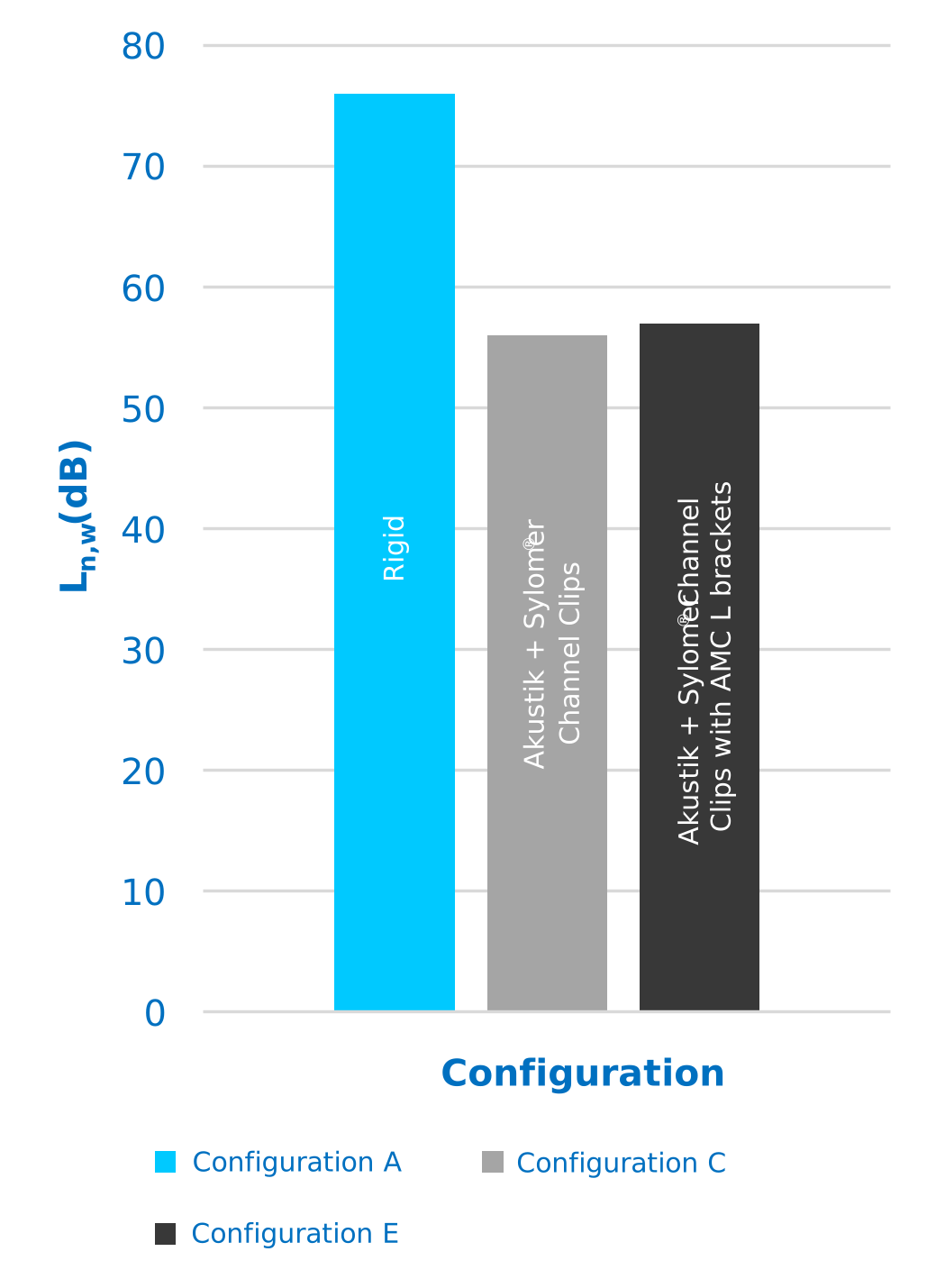
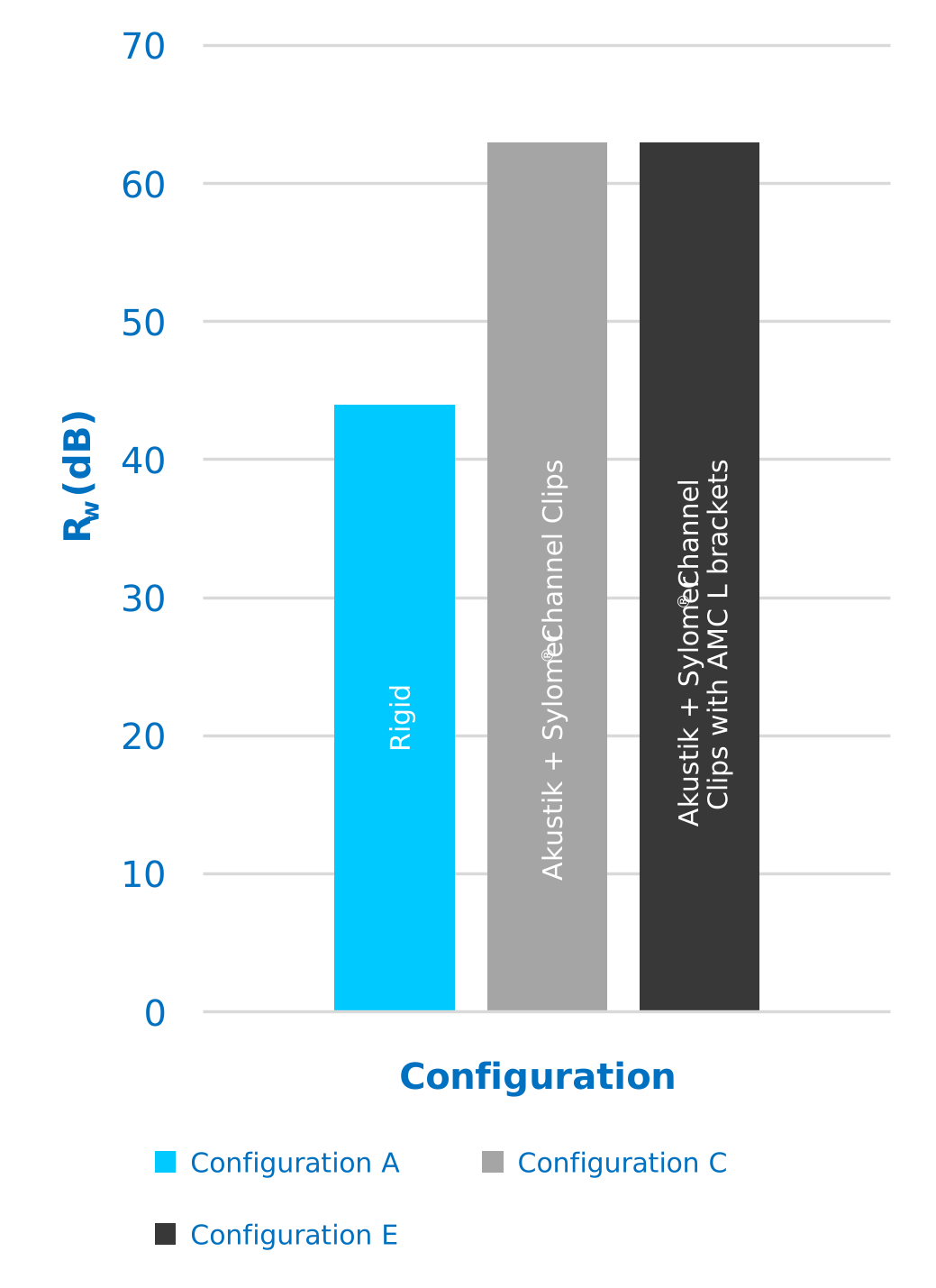
These results clearly show how the noise insulation can be improved in timber ceiling structures by using the Akustik + Sylomer® Channel Clips. A comparison chart of the Ln,w and Rw values of the solutions with 2 plasterboards (to make a fair comparison) are shown below:
| CEILING SOLUTIONS WITH 2x PLASTERBOARDS | |
|---|---|
|
|
The difference between a rigidly suspended ceiling and an elastically suspended one is very clear, reaching improvements between 17dB and 20dB in impact noise level and 19dB in airborne noise reduction.
Rigidly suspended ceilings are unable to meet the noise insulation requirements of England, Wales and Scotland.
The solutions with Akustik + Sylomer® Channel Clips with 2x plasterboards, on the other hand, meet the requirements in all cases.
Do not hesitate to contact our application engineers for more information on this product.