LABORATORY TEST RESULTS FOR SYLOMER AFS GYM DRY FLOOR SYSTEMS
This article shows the results of tests for dry floating floor installations designed for gyms. Following on from the tests already carried out with the GYM Dry Floor systems based on 50 mm Sylomer blocks, the same tests have been carried out by replacing the Sylomer block with AFS springs which have a greater elastic travel.
INTRODUCTION
Gyms are becoming more and more popular and the activities in them more and more extreme. Due to the boom in this type of activity and the business behind it, gyms have moved closer to urban centers.
The proximity of a quality sports facility has innumerable benefits, but it brings with it a difficult coexistence with neighbors in the same building. Activities such as dumbbell throwing, weight dropping, jumping, etc. create a disturbance for the neighbors.
This problem is aggravated when this sporting activity takes place at night, making it difficult for neighbors to rest. On many occasions, municipal regulations force the closure of gyms for exceeding the maximum permissible noise limits, with the consequent suspension of the gym's activity and loss of investment.
The correct design of an acoustic solution with a floating floor such as the AFS Sylomer Gym Dry Floor systems can put an end to these disturbances, allowing the neighbor’s rest and the gym's activity to coexist.
THE SYSTEMS THAT HAVE BEEN TESTED ARE:
AFS SYLOMER® GYM DRY FLOOR – BASE: |
|---|
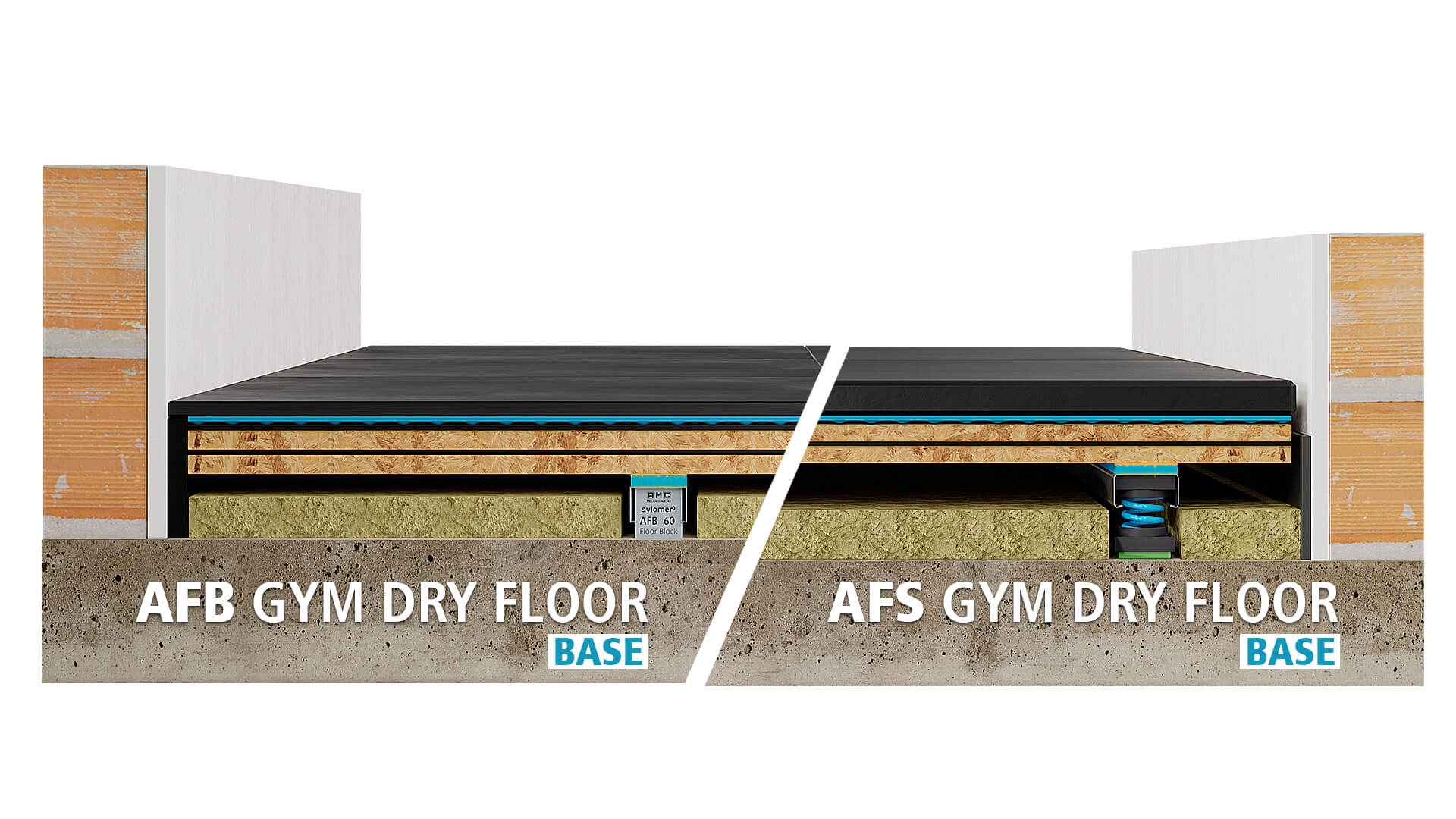
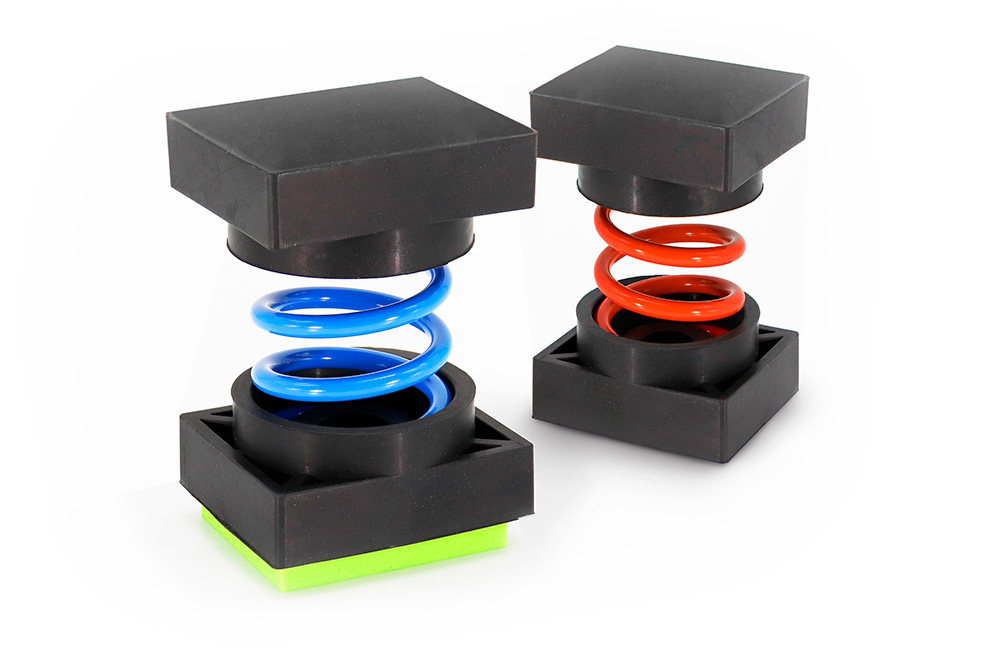
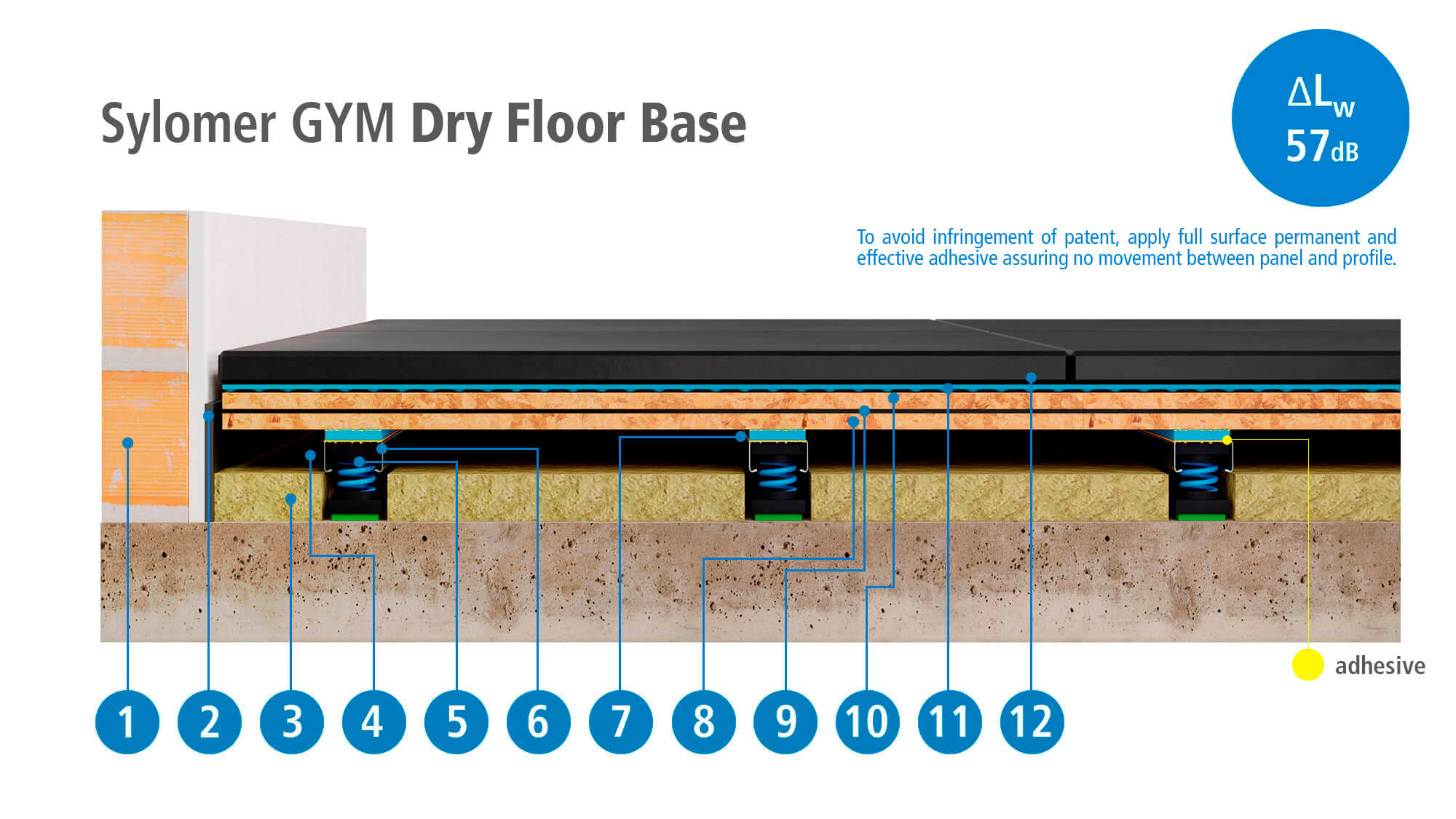
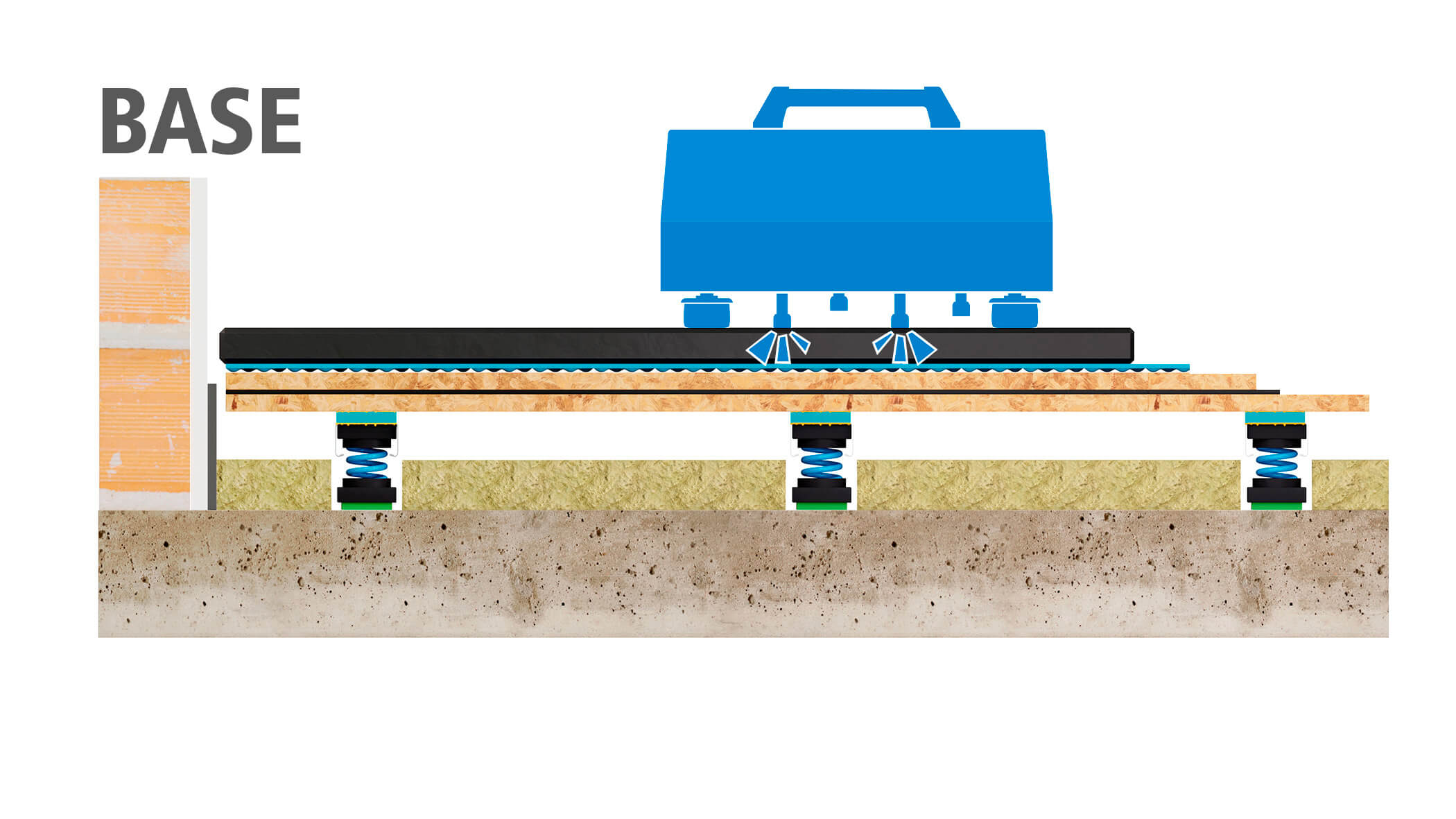
This system is based on an AFS + Sylomer spring of more than 15 mm maximum deflection installed approximately every 500 mm with metal profiles, on top additional Sylomer strips are installed. The dry floor is made of 18 mm OSB type 3 double board with an intermediate layer of neoprene. A final elastic layer of Getzner Floor Mat 29 is finished with a rubber sports floor on top.
|
|
SYLOMER® GYM DRY FLOOR – ADVANCE: |
|---|
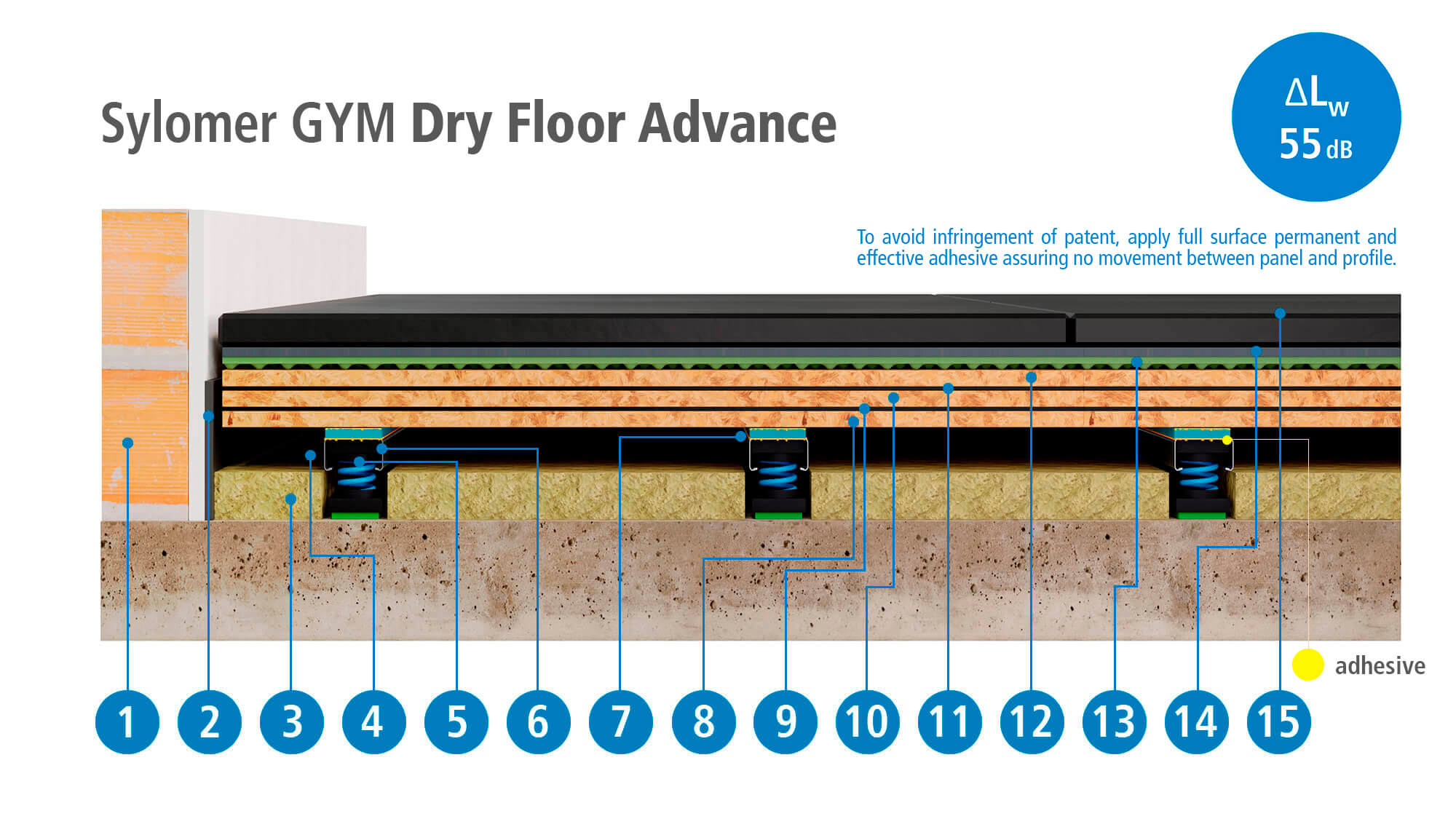
The previous base system is upgraded with an additional OSB type 3 chipboard and an additional neoprene middle layer. Furthermore, the elastic top layer is improved with the more elastic Getzner 33 board and an additional 12.5 mm shock-absorbing buffer layer.
|
|
SYLOMER® GYM DRY FLOOR – PRO: |
|---|
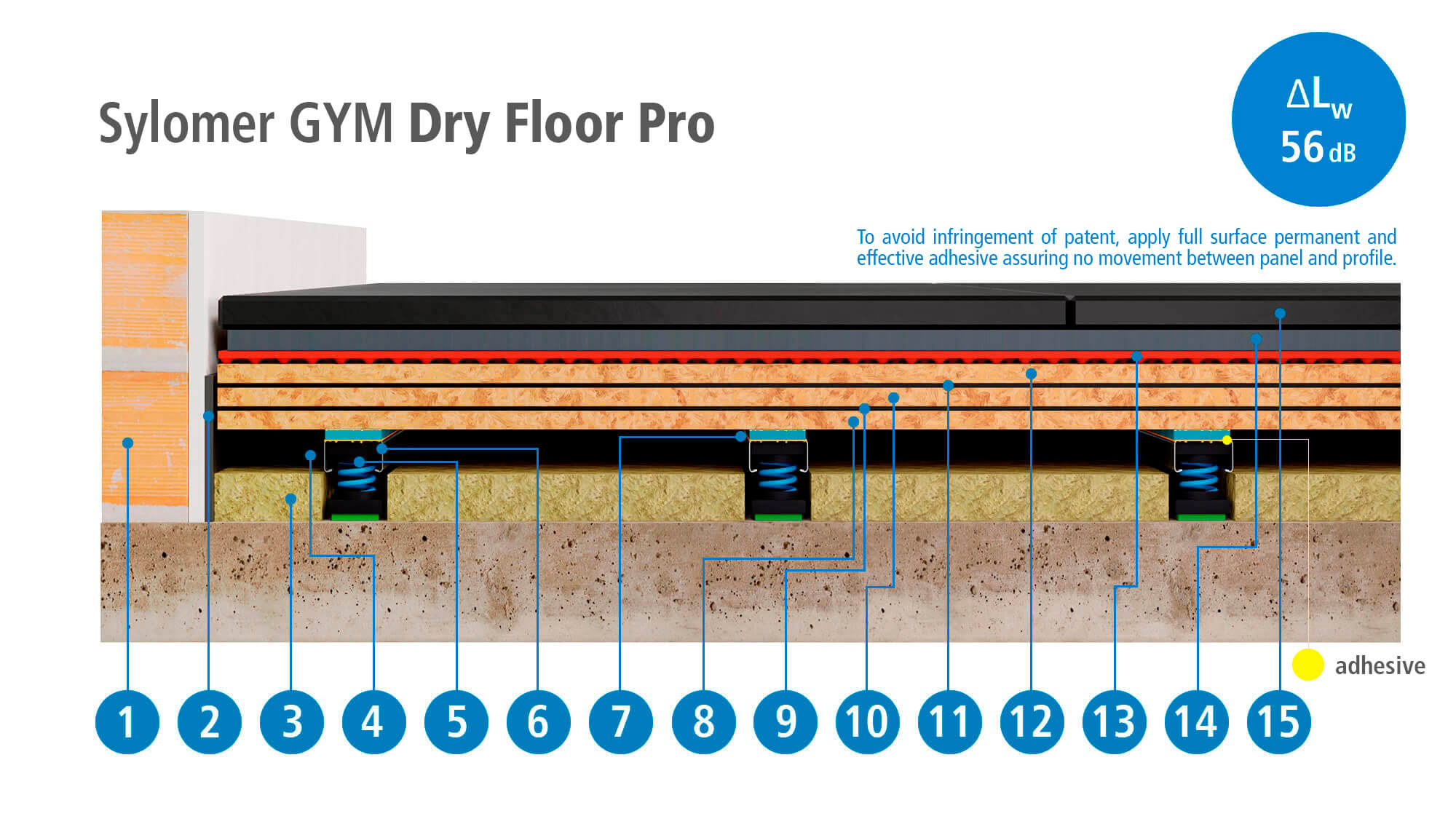
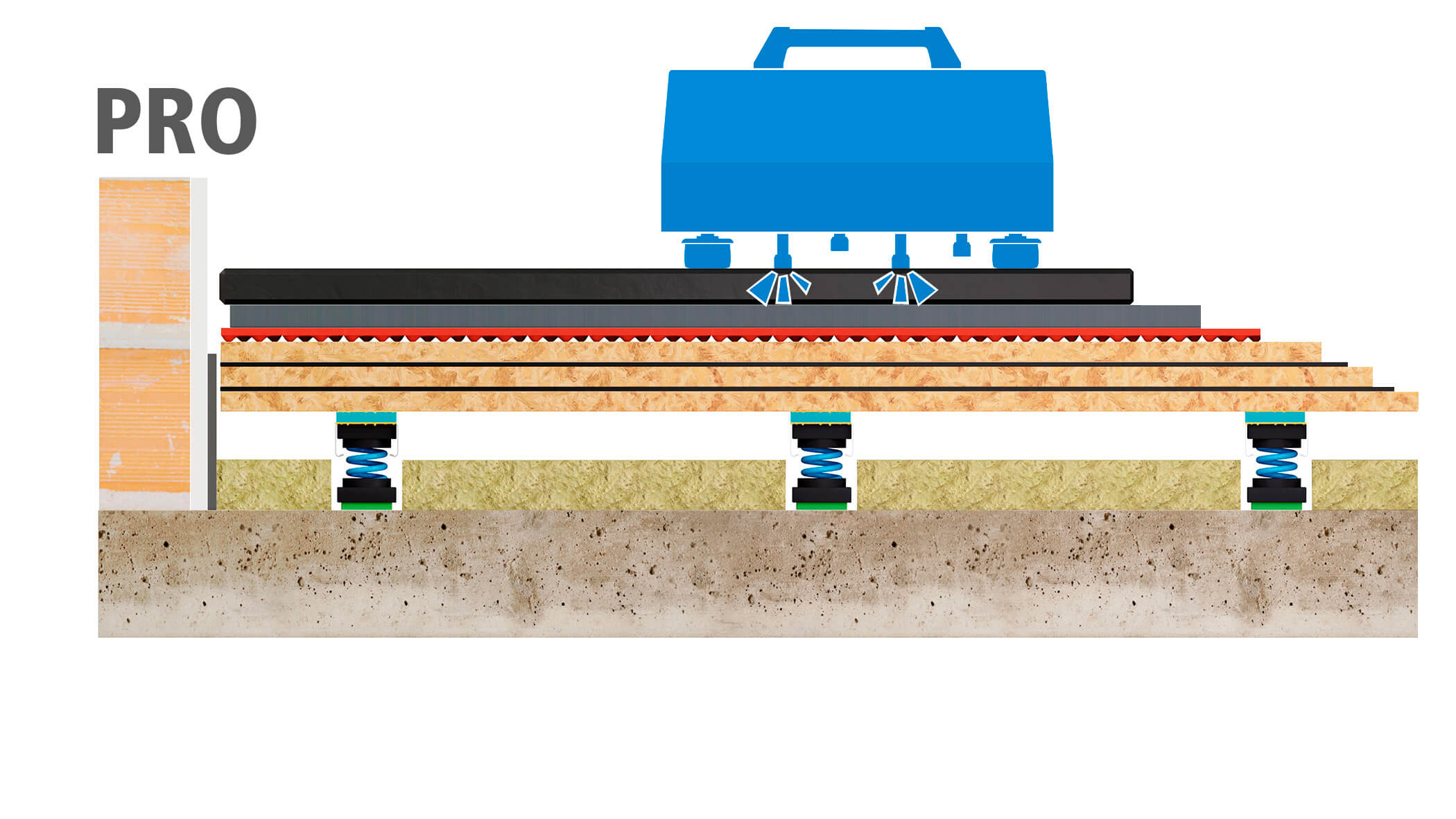
The best result is achieved when the Advance system replaces the elastic top layer with the high-performance Getzner 35 mat and adds a 25 mm shock absorber. The higher damping coefficient helps to dissipate some of the impact energy.
|
|
RESULTS OF LABORATORY TESTS
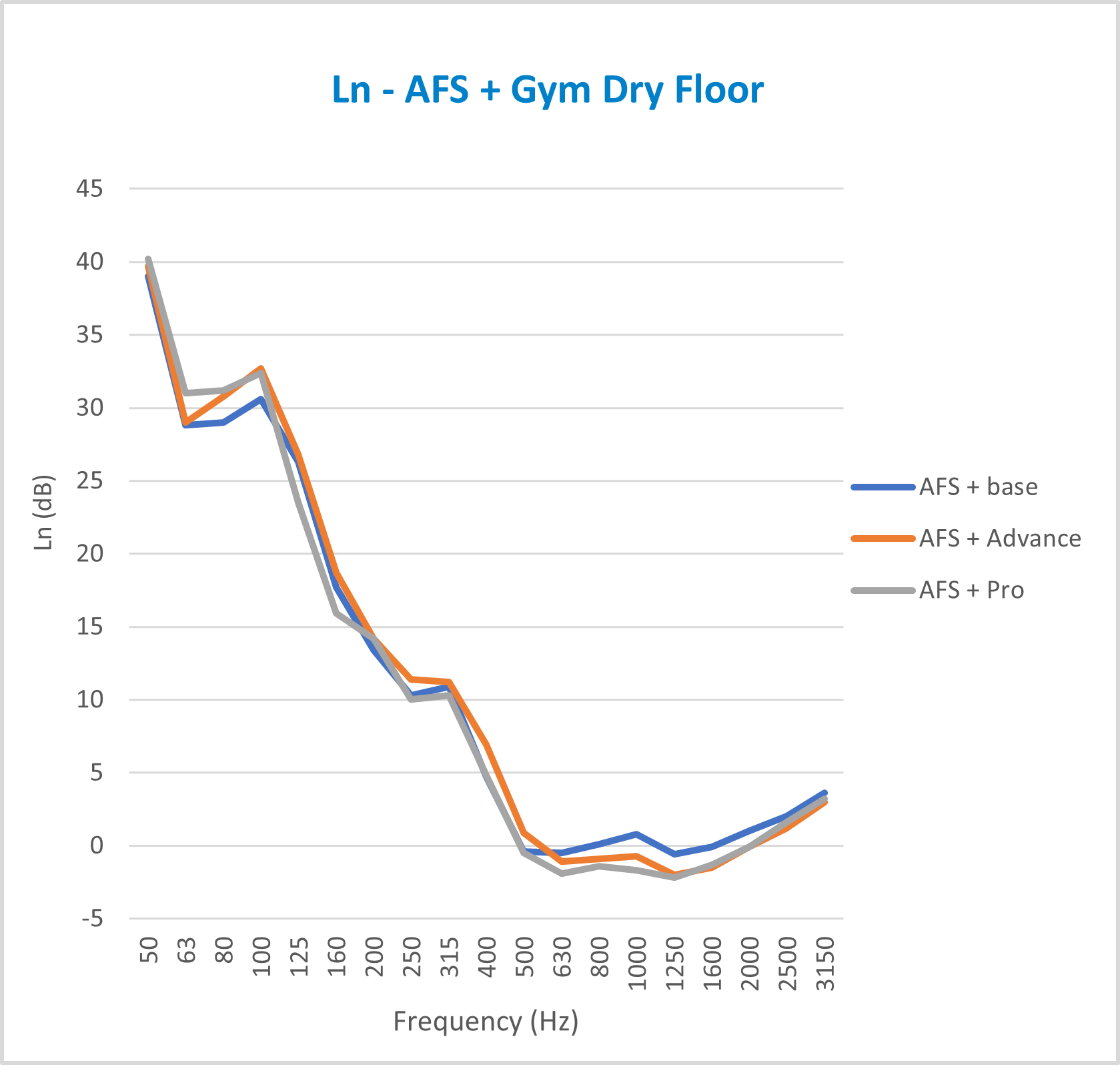
In order to show the acoustic advantages of using the AFS Sylomer Gym Dry Floor systems, impact noise tests have been carried out with different configurations. In addition to this, noise tests have been carried out to show the performance of each alternative in the most extreme gym activity. Dumbbells of different weights have been dropped from different heights causing different energy impacts on the floating dry floor, at the same time the noise is measured in the chamber below.
To avoid infringement of patent, apply full surface permanent and effective adhesive assuring no movement between panel and profile.
*AMC does not make installations of this systems.| Impact sound measurement - Measurement of impact noise EN ISO 10140-3 | Impact noise improvement assessment: ISO 717-2 | ||
|---|---|---|---|
AFS + Sylomer Gym Dry floor: BASE |
|
|
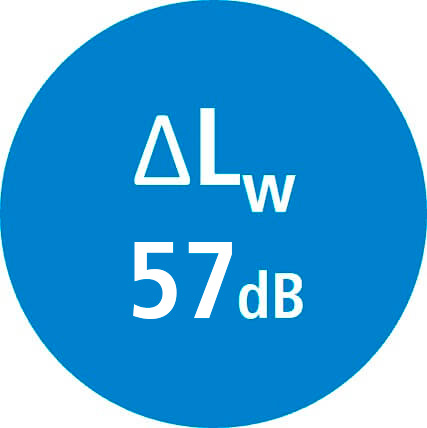
|
AFS + Sylomer Gym Dry floor: ADVANCE |
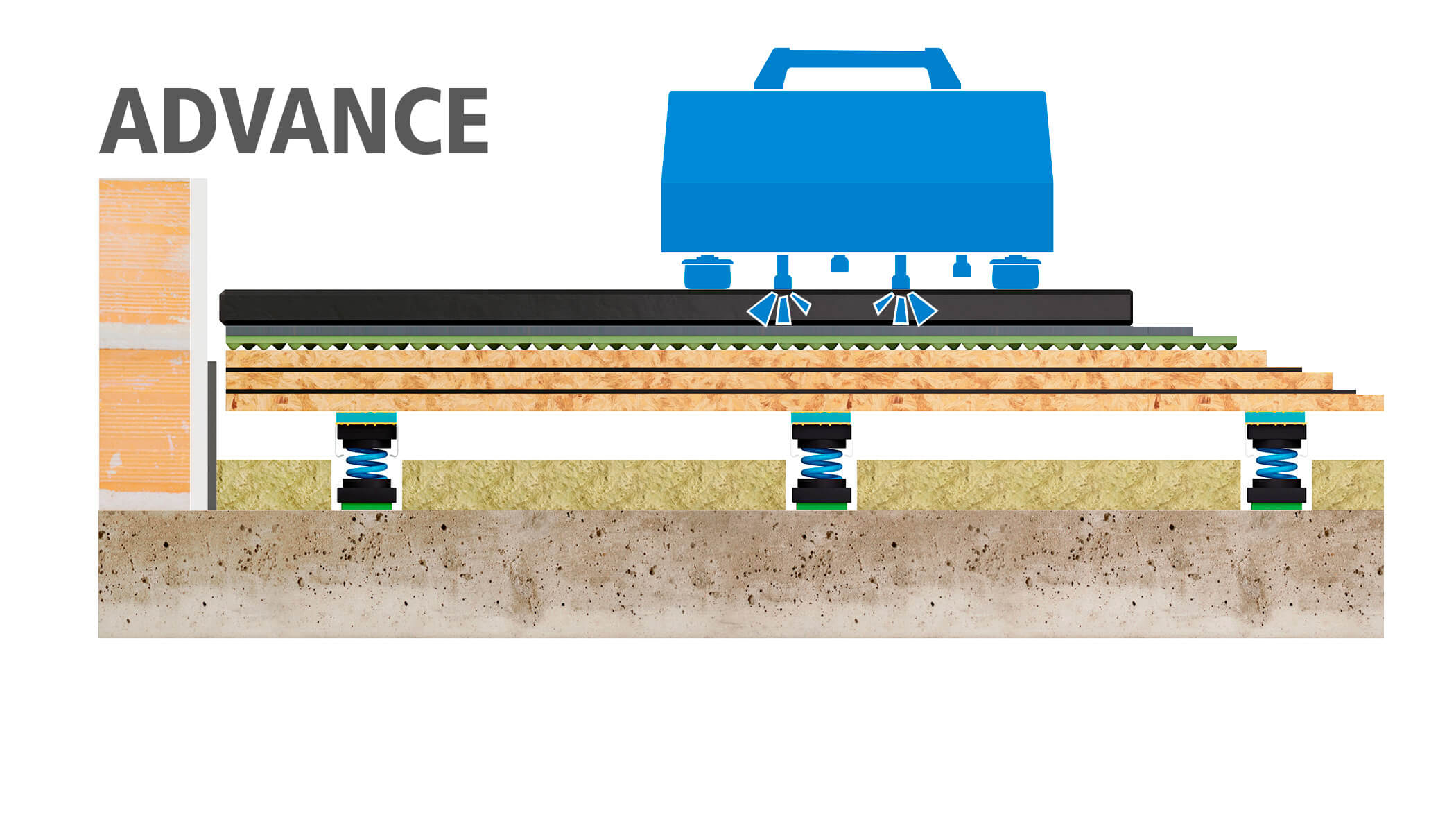
|
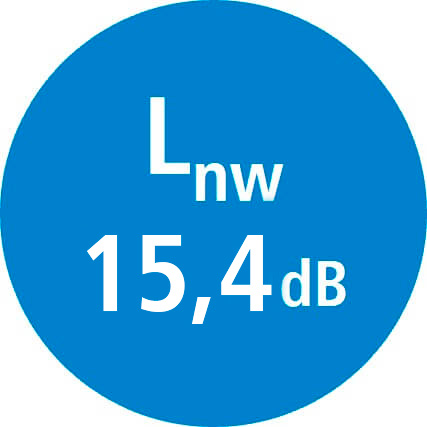
|
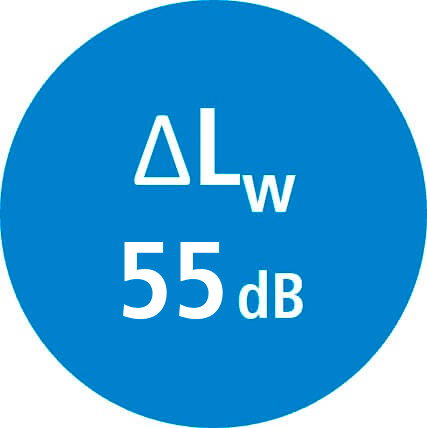
|
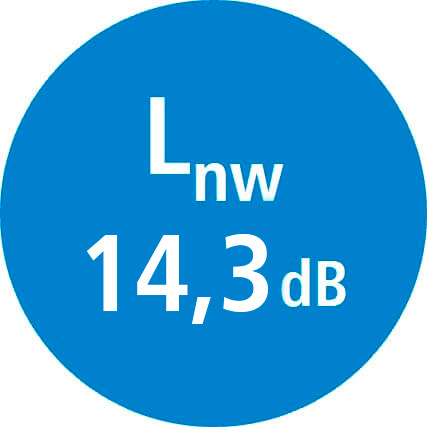
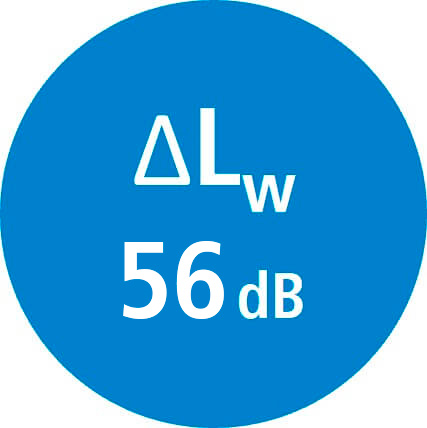
AFS + Sylomer Gym Dry floor: PRO |
|
|
|
| Test Reports | |||
|
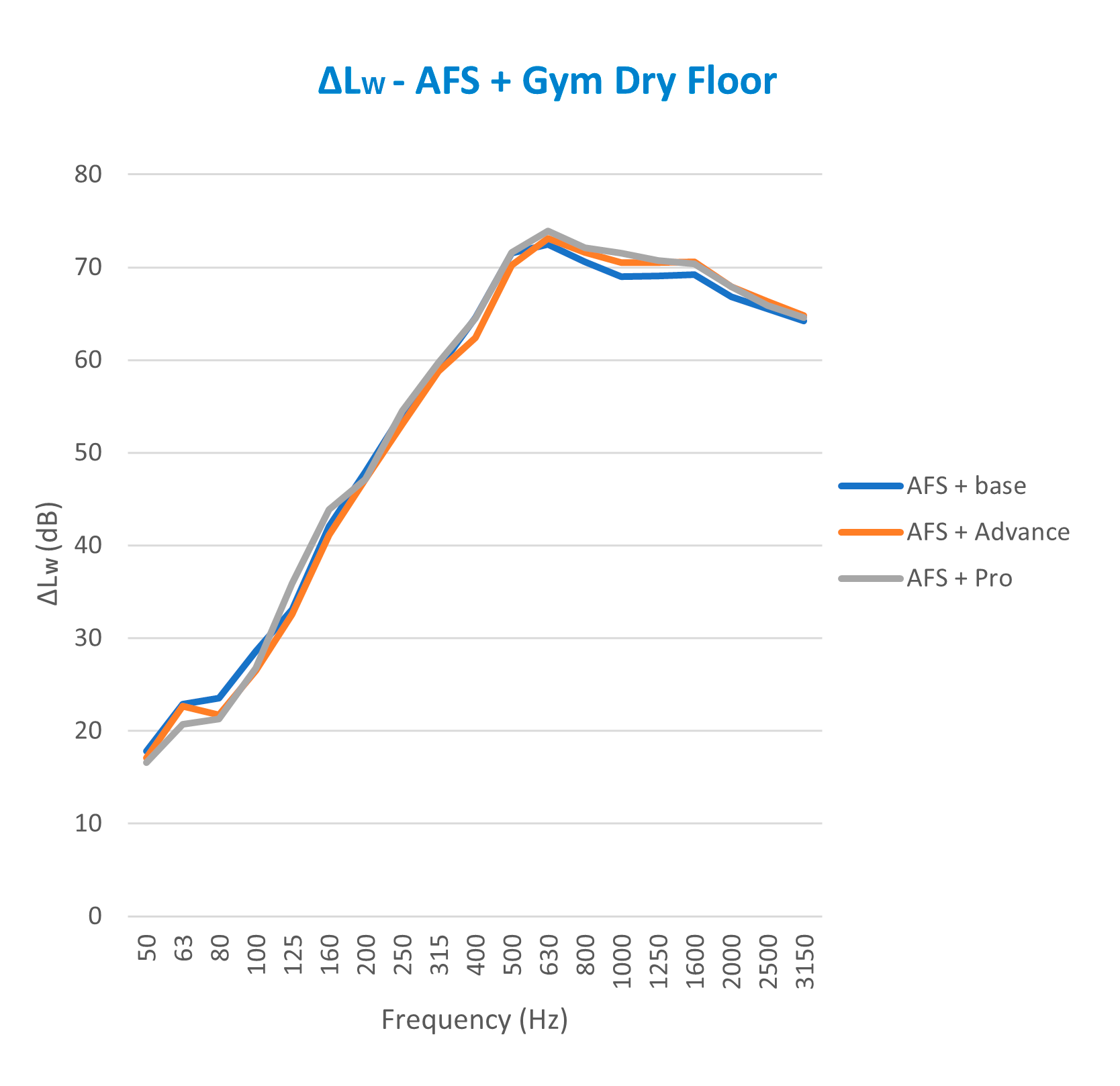
|
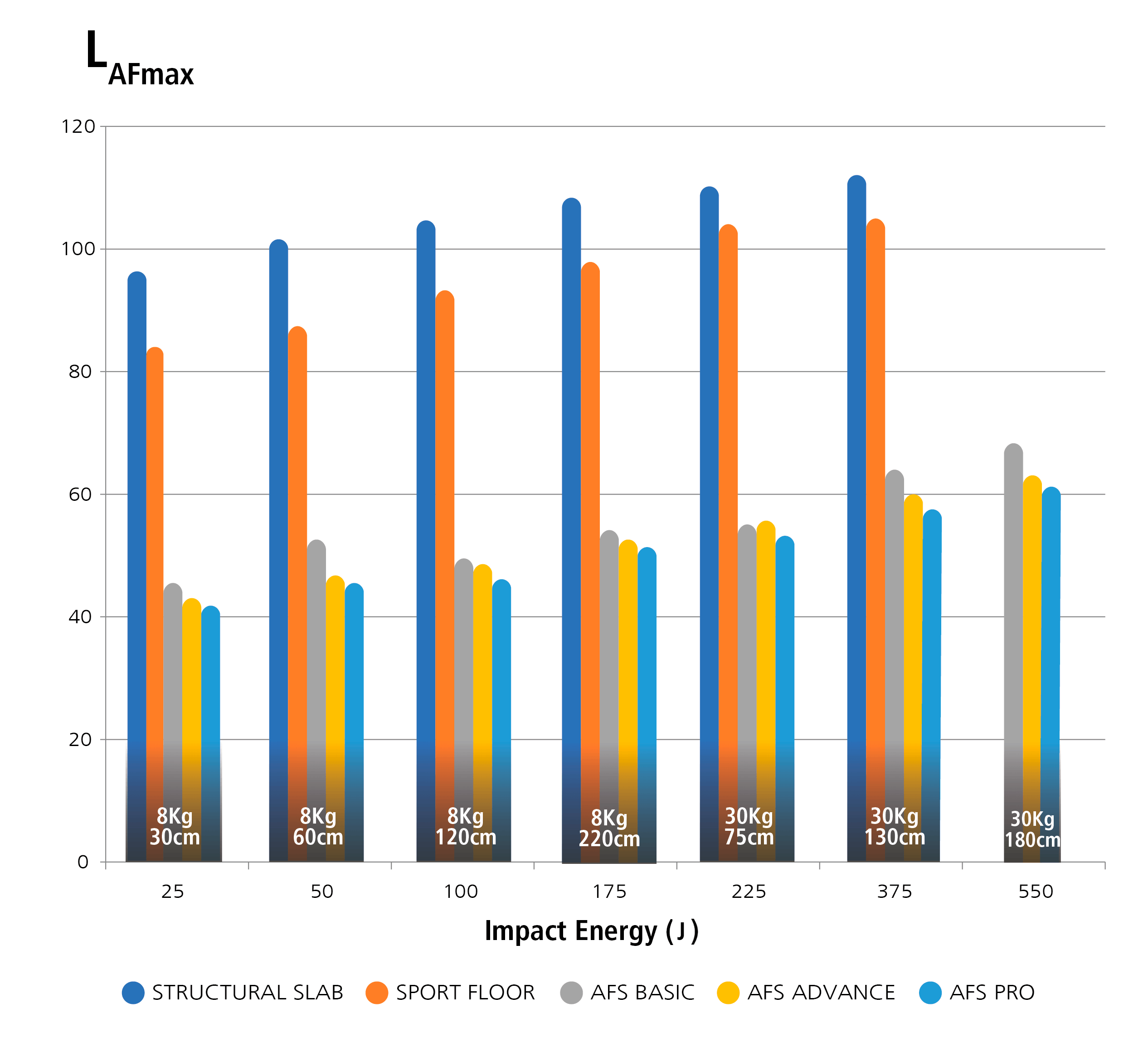
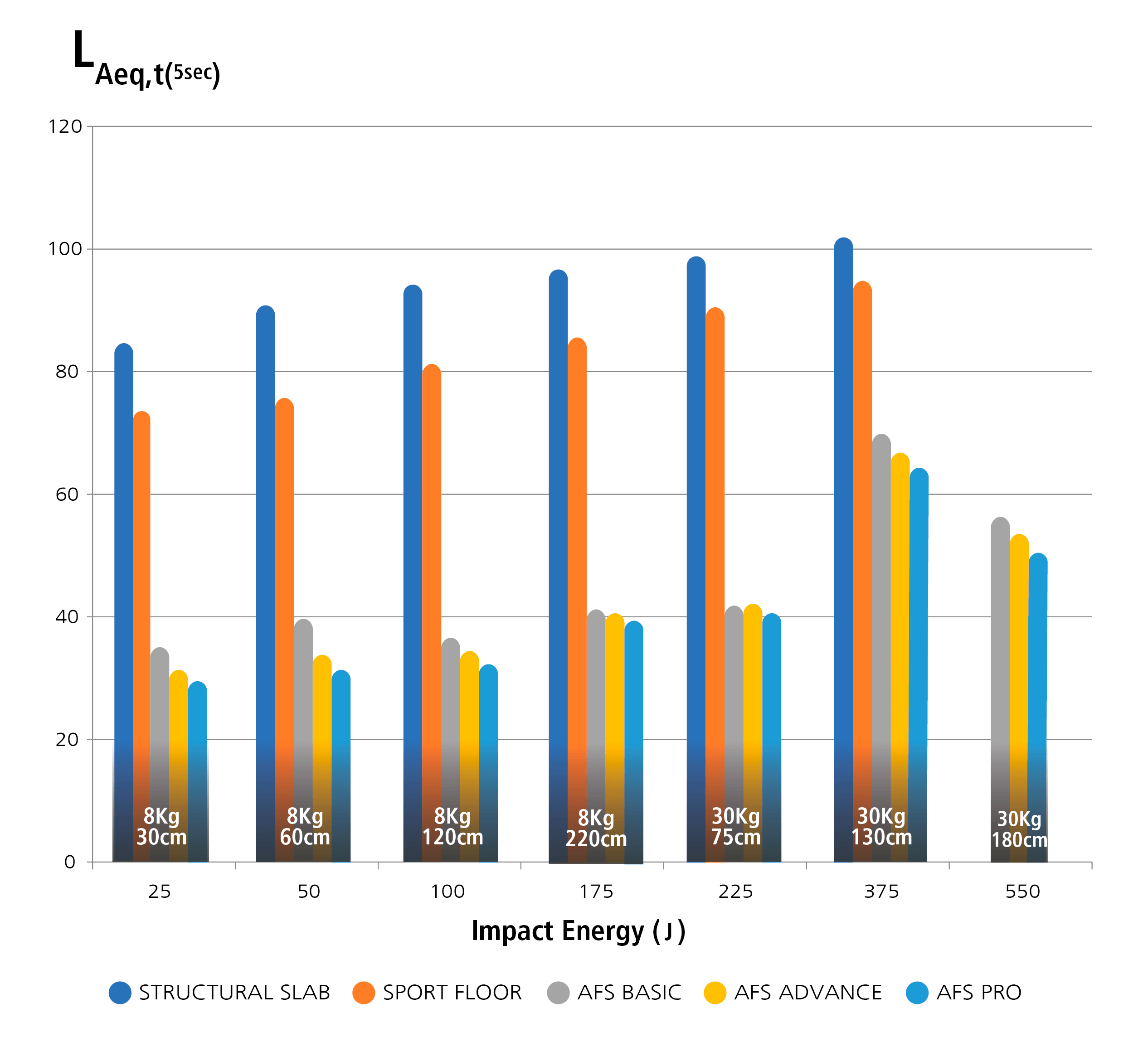
In addition to the standard impact noise, additional measurements have been performed by throwing dumbbells from different heights. In this way we are simulating extreme activity in a gymnasium.

|
|
CONCLUSIONS
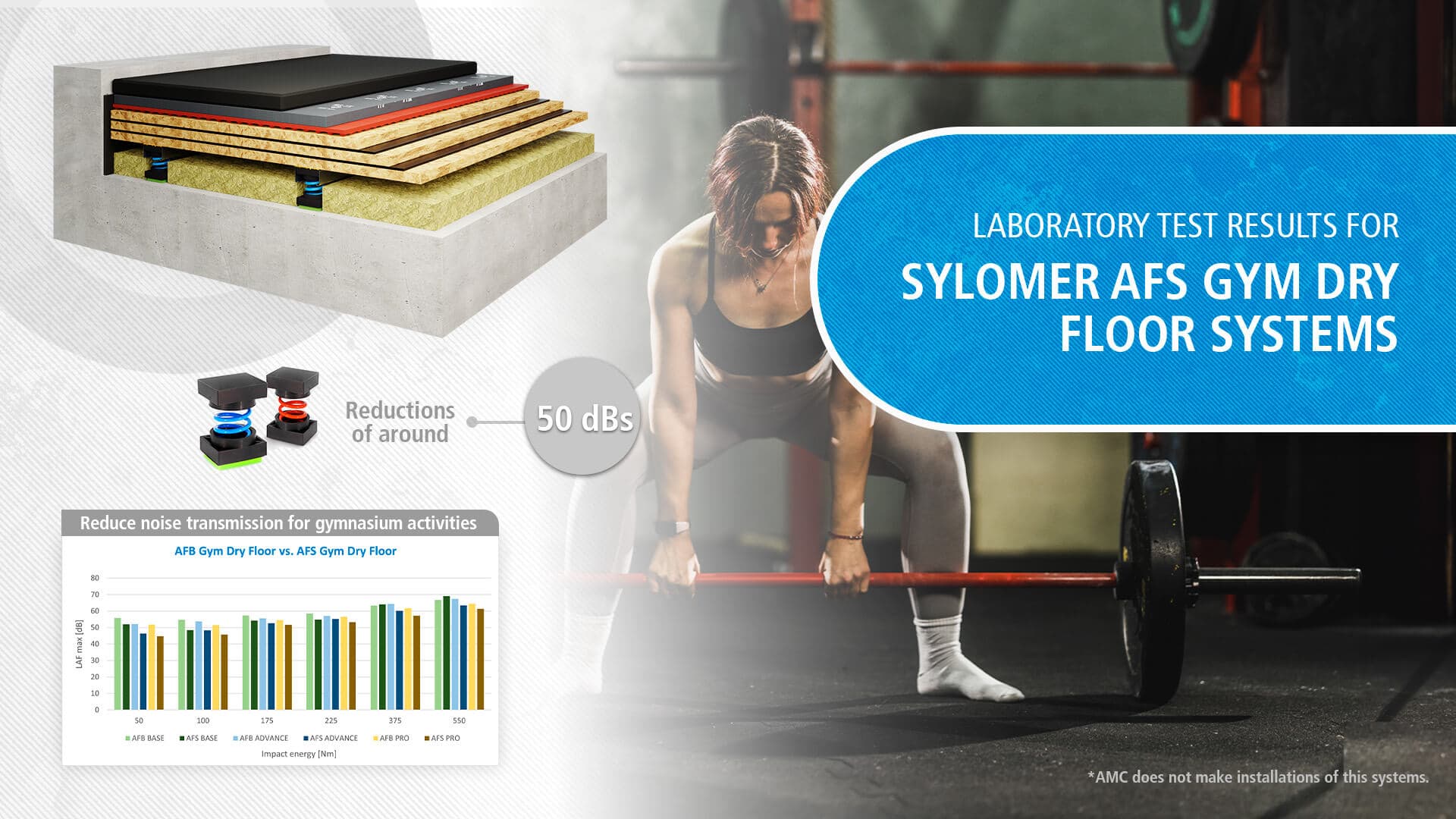
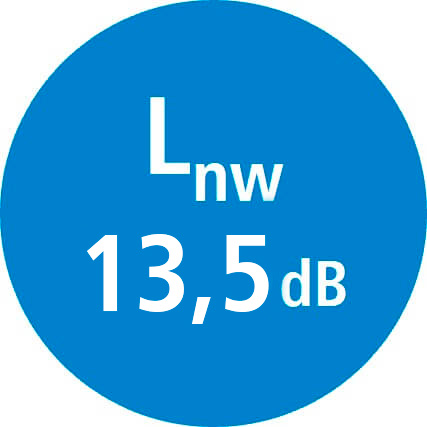
These results clearly show how the AFS Sylomer Gym Dry floor can help to reduce noise transmission for gymnasium activities. Impact noise is significantly improved by more than 55 dBs with any of the alternatives.
But what is particularly interesting is the reduction of the maximum noise level that is achieved on the floor below when the dumbbells are thrown. The use of a regular rubber sports floor only achieves a reduction of 10 dBs while AFS Sylomer Gym Dry floor systems achieve reductions of around 50 dBs.
Another point to consider is the high noise level obtained during dumbbell throwing. The use of a normal rubber sports floor results in a noise level of around 80 dBs, which can be very uncomfortable. With the AFS Sylomer Gym Dry Floor systems, we have managed to reduce the noise level by more than half.
This type of floating floor is absolutely essential for the operation of a gymnasium in a residential building.
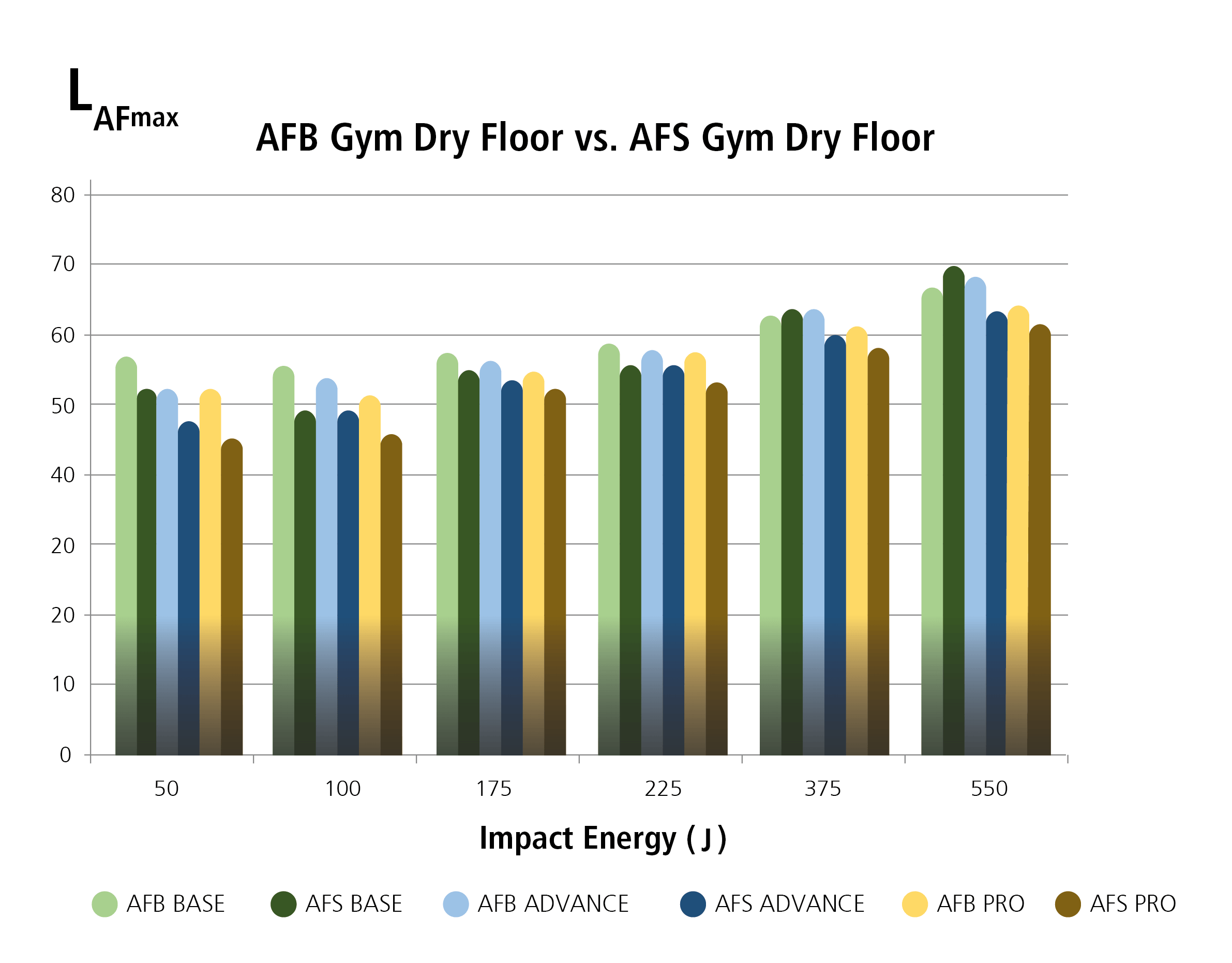
If we compare the results obtained with the dry systems with AFB Floor Block and AFS springs, we can see that there is an improvement of about 4-5 dBs on average, although in some cases the improvement can be up to 10 dBs.