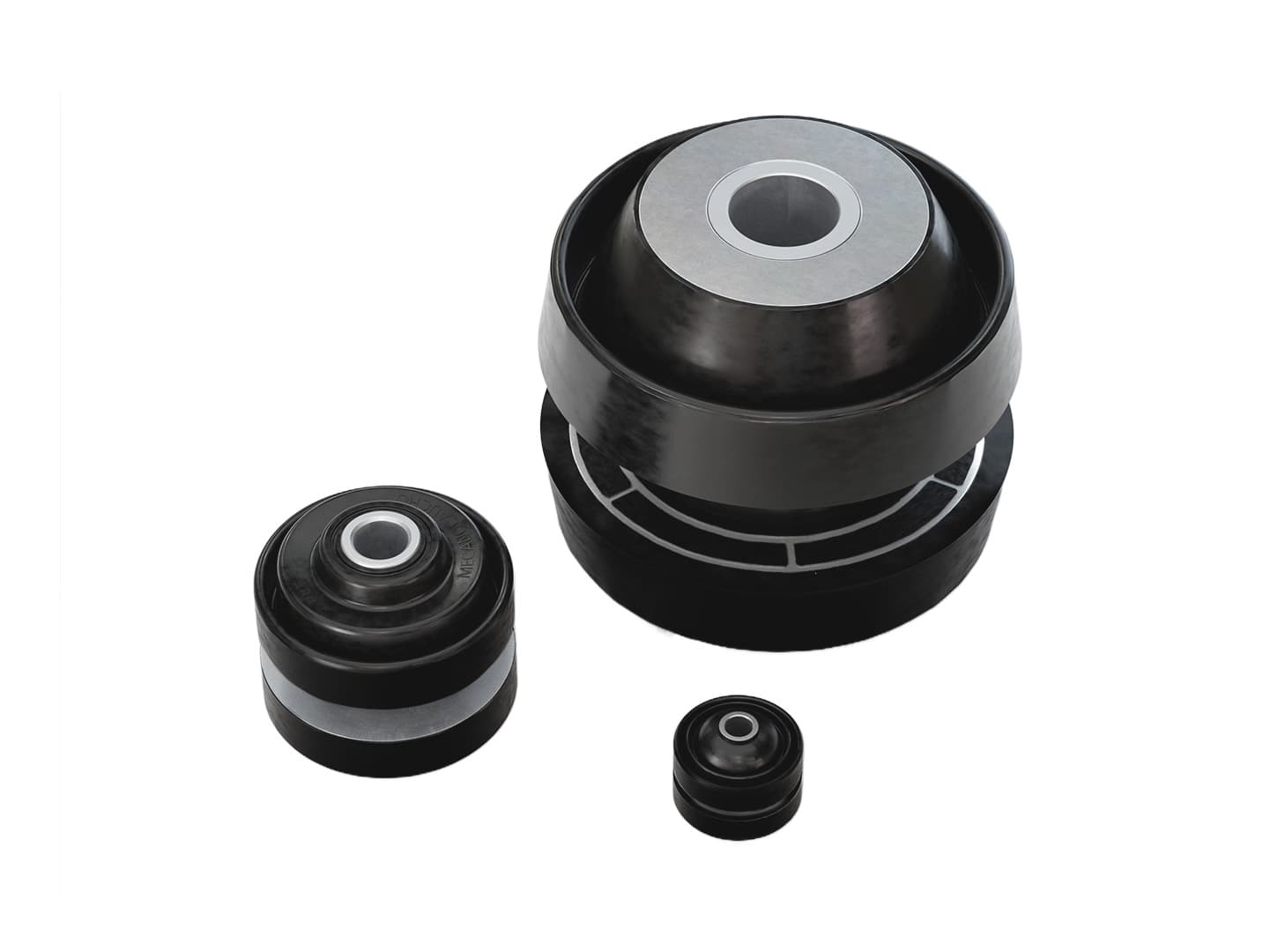
Vibration Isolation of Pantographs
Elastic decoupling of the pantograph frame from the rail vehicle structure.
Pantograph operation can generate vibration and dynamic loads that may be transmitted through its mounting points to the roof and vehicle structure.
The installation of vibration isolators between the pantograph frame and the roof structure provides an elastic connection that reduces the transmission of vibration and structure-borne noise into the vehicle body.
The arrangement and characteristics of the isolators are selected according to the loads, mounting-point configuration, and dynamic requirements of the installation.
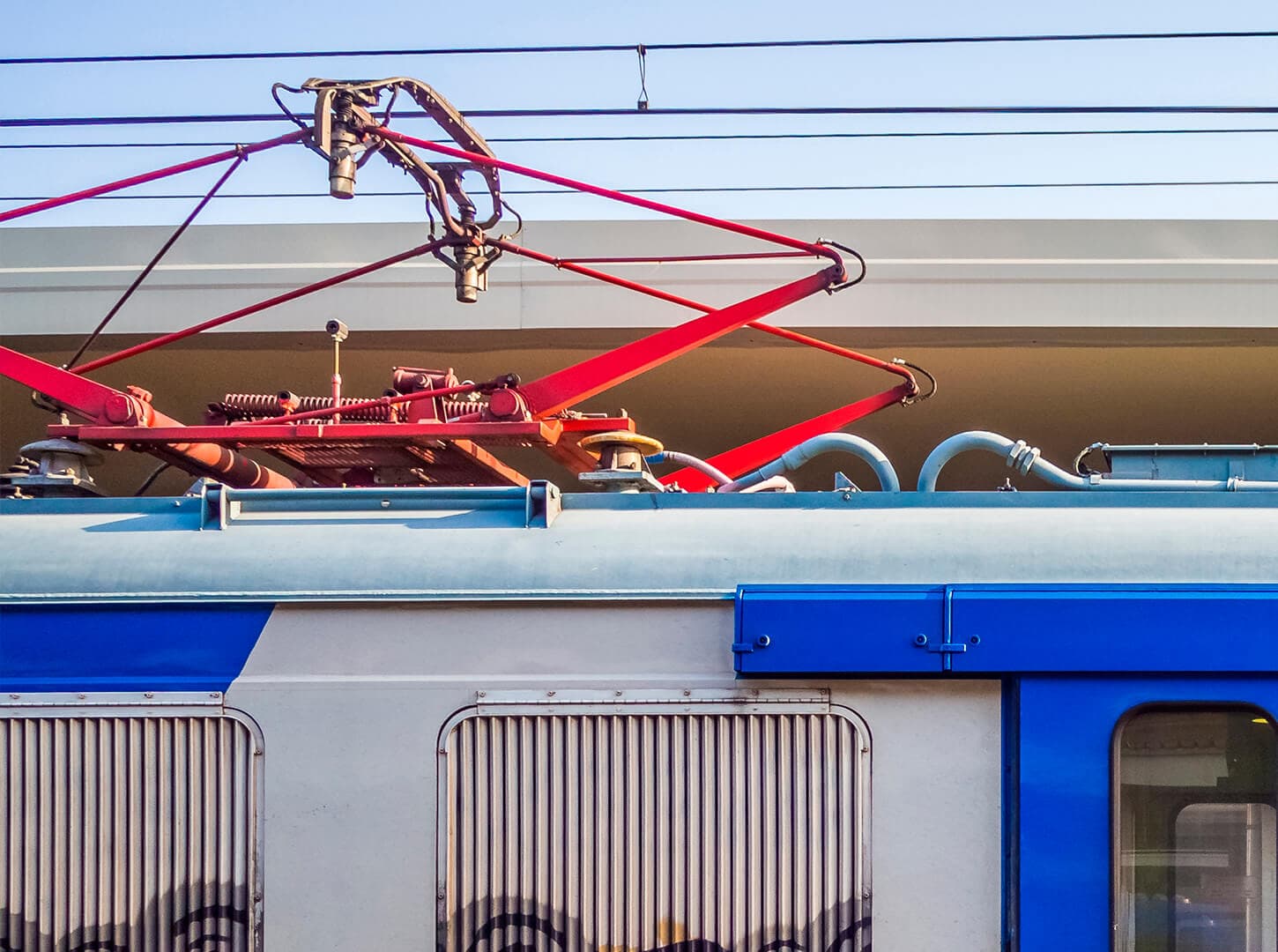
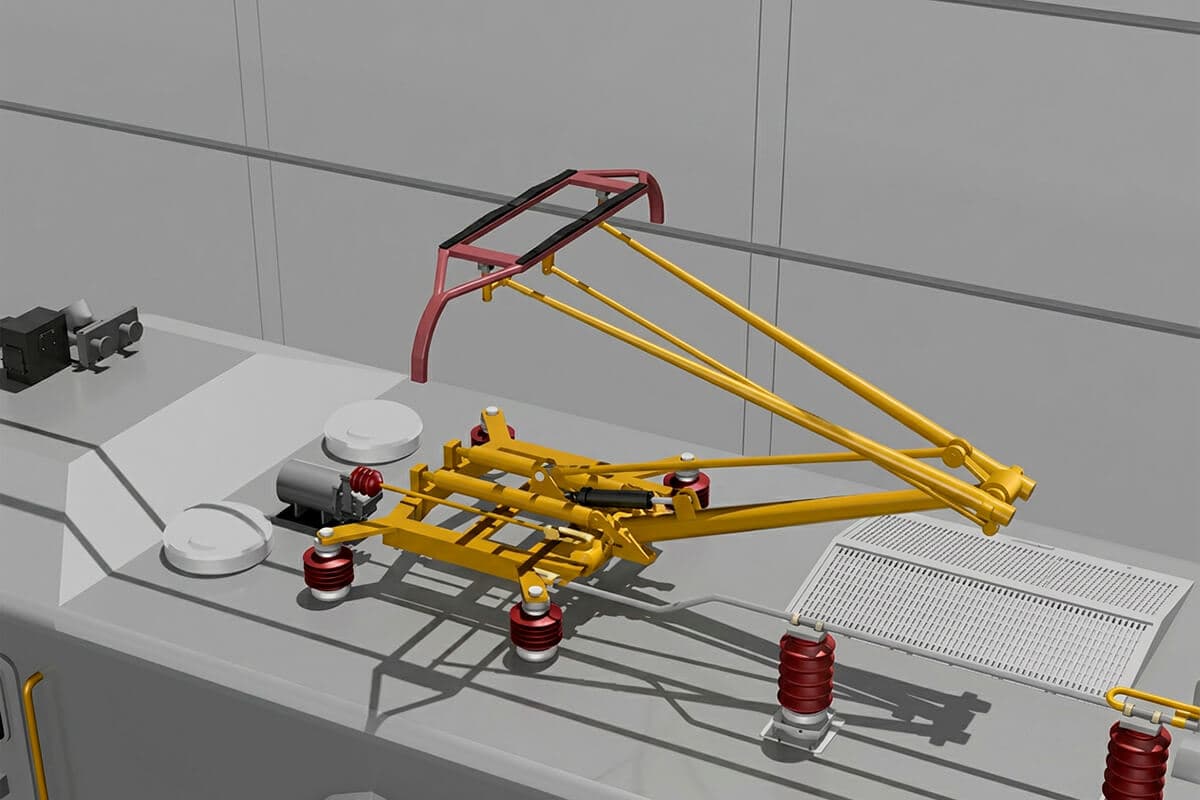
Vibration isolators are installed at the connection points between the pantograph frame and the roof structure to prevent a rigid connection between the two assemblies.
This elastic decoupling helps reduce the transmission of vibration and structure-borne noise from the pantograph into the vehicle structure while supporting the static and dynamic loads associated with its operation.
The isolators can be selected and positioned according to the frame geometry, load distribution, and required level of vibration isolation, facilitating their integration into the rail vehicle design.
Vibration isolators for this solution