
HOW RUBBER MOUNTS LOSE THEIR ELASTIC PROPERTIES
INTRODUCTION
This article is applicable to all types of rubber mounts regardless of the brand or type of support. The elastomer degradation process occurs in all types of mounts in a similar way.
In this article the reasons and the degradation process of the elastomeric compound in rubber mounts are emphasized. By knowing how and why the elastic properties of a mount degrade over time, this article can help to determine which practices are correct to extend the life of support.
We will start first with the mechanics of elastomers. It does not matter the type of rubber, hardness or color since all elastomers are composed of polymeric chains. The term polymer comes from the Greek "poly" which means many and "mer" which means parts. Natural rubber, as well as other rubber compounds, is a polymer, a long-chain shaped molecule that contains repeating subunits.
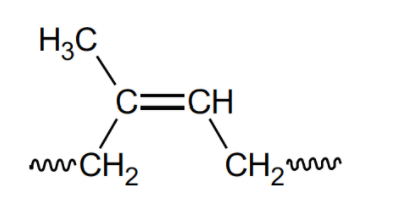
Fig 1: Representation of a subunit of natural rubber
We can make use of the analogy of a tangled spaghetti plate representing a mass of polymer. The individual spaghettis represent a single polymer chain. The long length of the chain allows for tangles. With the discovery of vulcanization, a structure could be formed with sulfur bonds linking individual polymer chains in a three-dimensional network. Chains now have extensibility allowing for tension support and retraction upon release of tension. Our spaghetti analogy just changed from disconnected spaghetti holders to a fishnet structure like in vulcanized rubber.
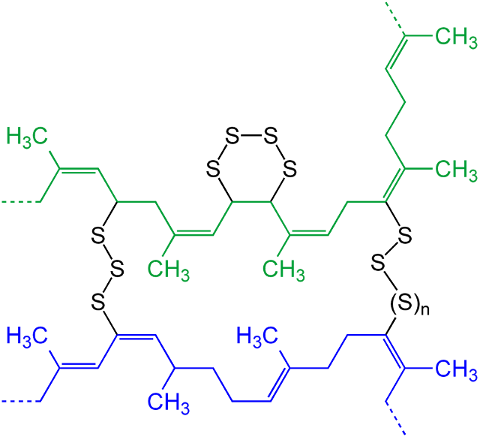
Fig 2: Representation of sulfur cross-links between blue and green natural rubber strands
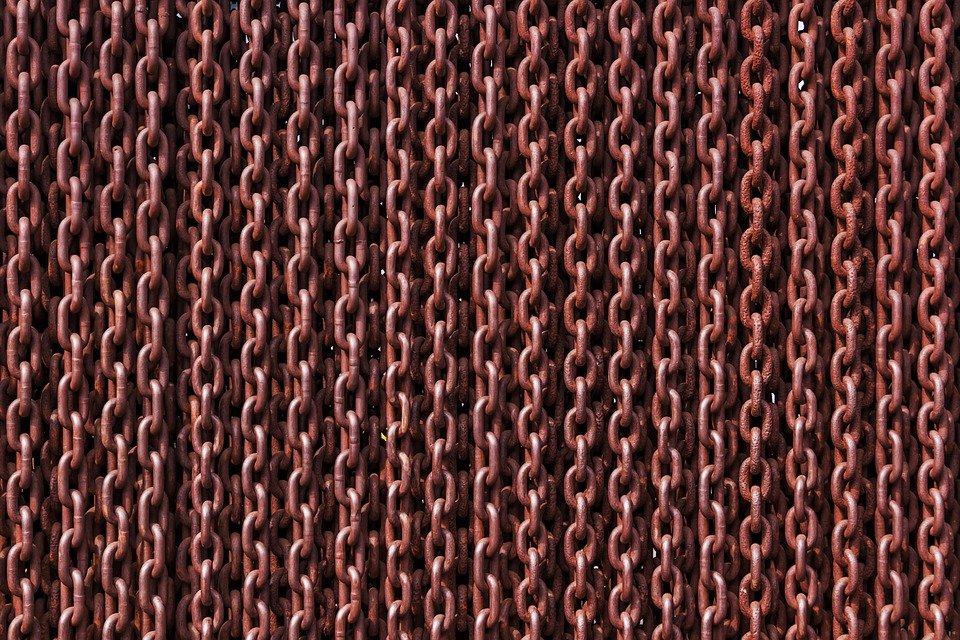
So in a simplistic way, we can say that elastomers are made up of a huge set of chains, as shown in the image below.
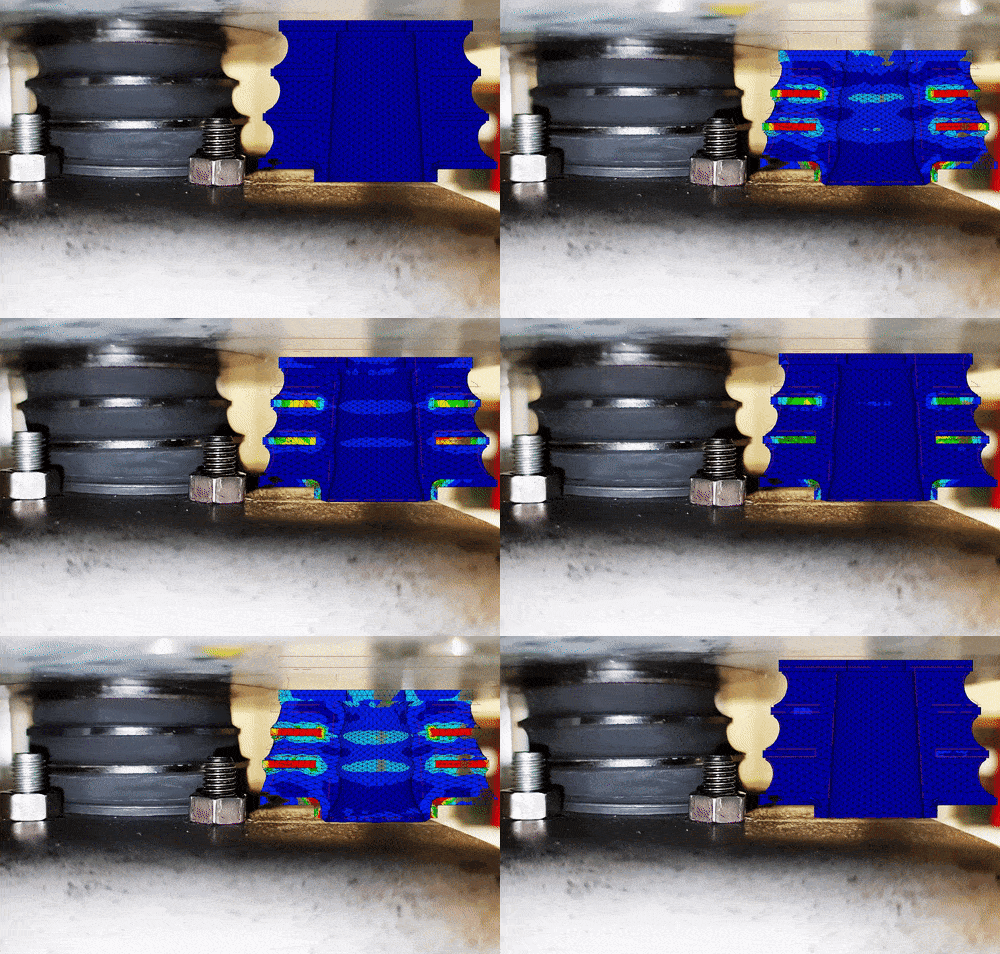
Vibrations can occur for various reasons or origins such as unbalance or misalignment of shafts in rotating elements, amplification due to resonance with the rotation frequency, etc. The vibrations create stress on the rubber, as you can see in the fatigue test video below.
This stress and strain creates a stress on the polymer chains. The stress in the system is shown in the following FEM image.
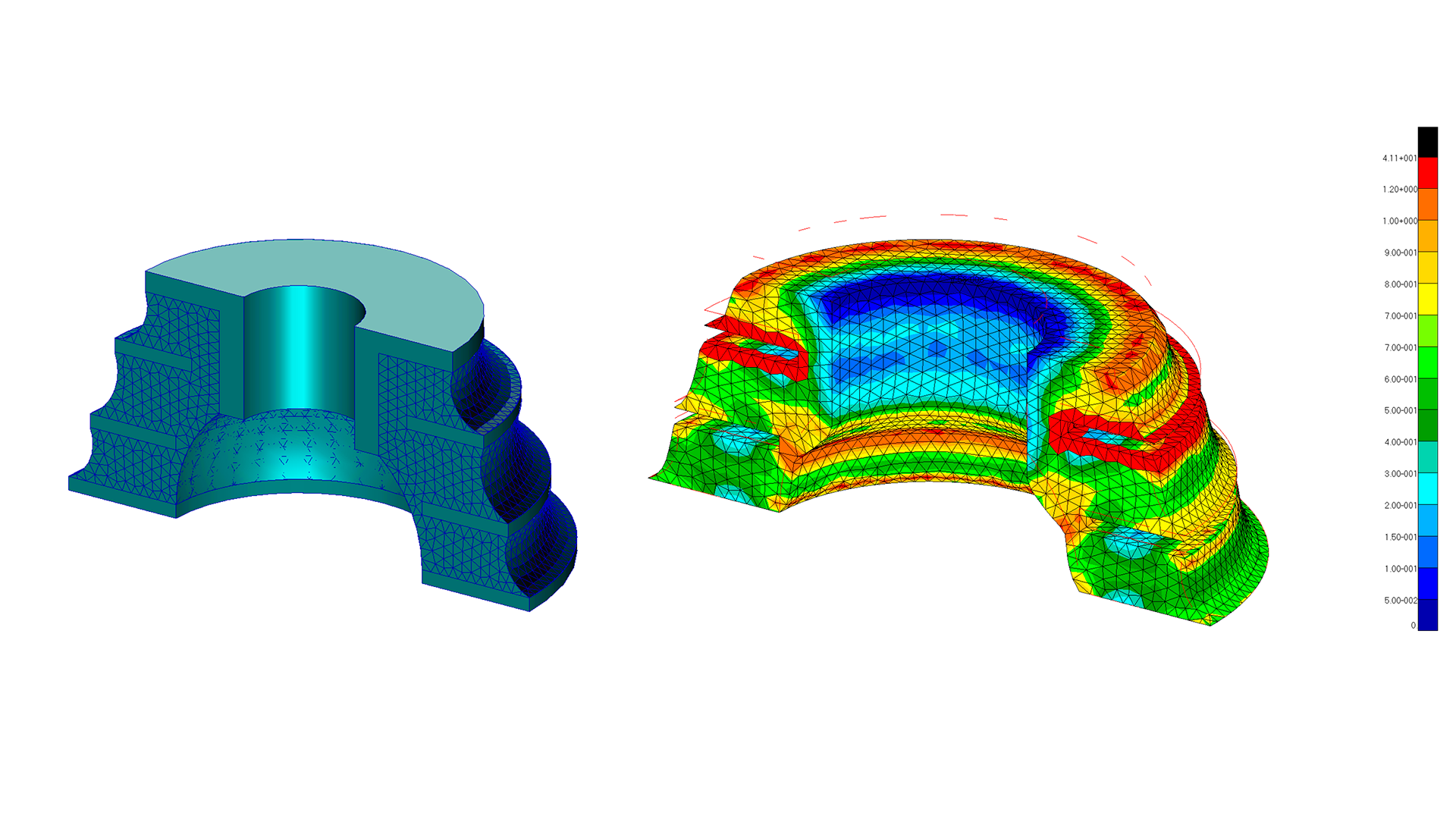
Polymer chains are subjected to many cycles of strain over the years. The polymer chains will break depending on the number of cycles.
Figure 3 shows a graph of load versus deflection of two rubber mounts, one new and the other used. As indicated above, the continuous stress caused by dynamic loads and vibrations in the elastomer, leads to the breaking of the polymer chains. Therefore, the rubber mount due to use and the passage of time shows fewer polymer chains to support the same load. This affects the deflection of the mount. As can be seen, over time, the deflection of the rubber mount goes from S1 to S2. This is because the remaining polymer chains have held out as long as they could, but have obviously become more deformed.
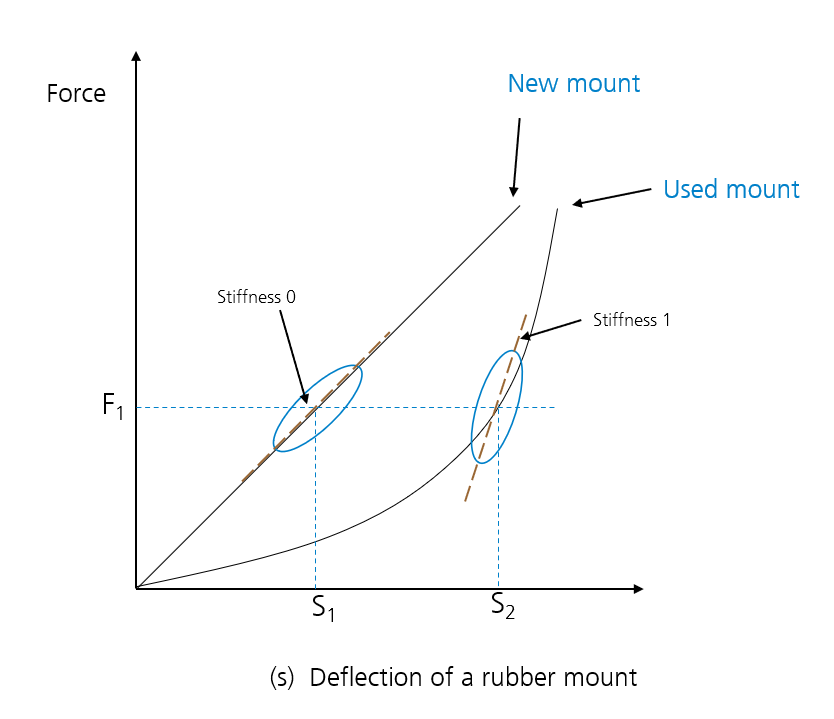
Fig 3: Load-Deflection curve of a new and a used support
From an insulation point of view, we must understand that the stiffness of flexible mounts plays a key role in insulation. But what is stiffness? Stiffness is the ratio of force to displacement. That is, the amount of force that is needed to cause a certain displacement or deflection. Stiffness is represented by a brown dotted line, showing the proportion or slope of the curve at a given force (F1). The stiffness 0 is the stiffness of a new support and the stiffness 1 is the stiffness of a used support. The stiffness of a used bracket is greater than that of a new bracket.
Rigidity plays an important role in the insulation of a suspended machine. Determine the resonant frequency of the system. The higher the stiffness of the suspension, the higher the natural frequency, so the lower the insulation.
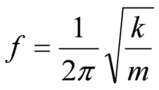
Fig 4: Natural frequency formula where K is the stiffness of the mounts and M is the mass of the system.
So, in other words, even if the system moves more and shows more elasticity, you might think that the system is better insulated against vibrations, but the case is quite the opposite. The vibrations are higher than ever.
SUMMARY
The degradation of elastomers occurs in all rubber mounts, its degradation depends directly on the load cycles and their magnitude. The degradation comes from the loss of polymer chains. The lower the polymer chains that we have in the frame, the more elastic the system will be. The more elastic the bracket, the more movement the suspended element will show, as well as damaging other elements of the system and unwanted noise. This will cause increased stress on the mounts causing the remaining polymer chains to break, creating self-powered degradation.