INSTALLATION ADVICE FOR MARINE MOUNTS
The correct position of the mounts can vary the vibration modes and reduce the natural frequencies of the suspended element, increasing the isolation ratio.
Key factors to consider are:
- All the mounts should withstand a similar static load. So, in longitudinal direction, the mounts should be installed symmetrically to the total COG.
- To achieve the lowest natural frequencies possible and better dynamic load distribution, in transverse direction, the mounts should be installed symmetrically to the total COG.
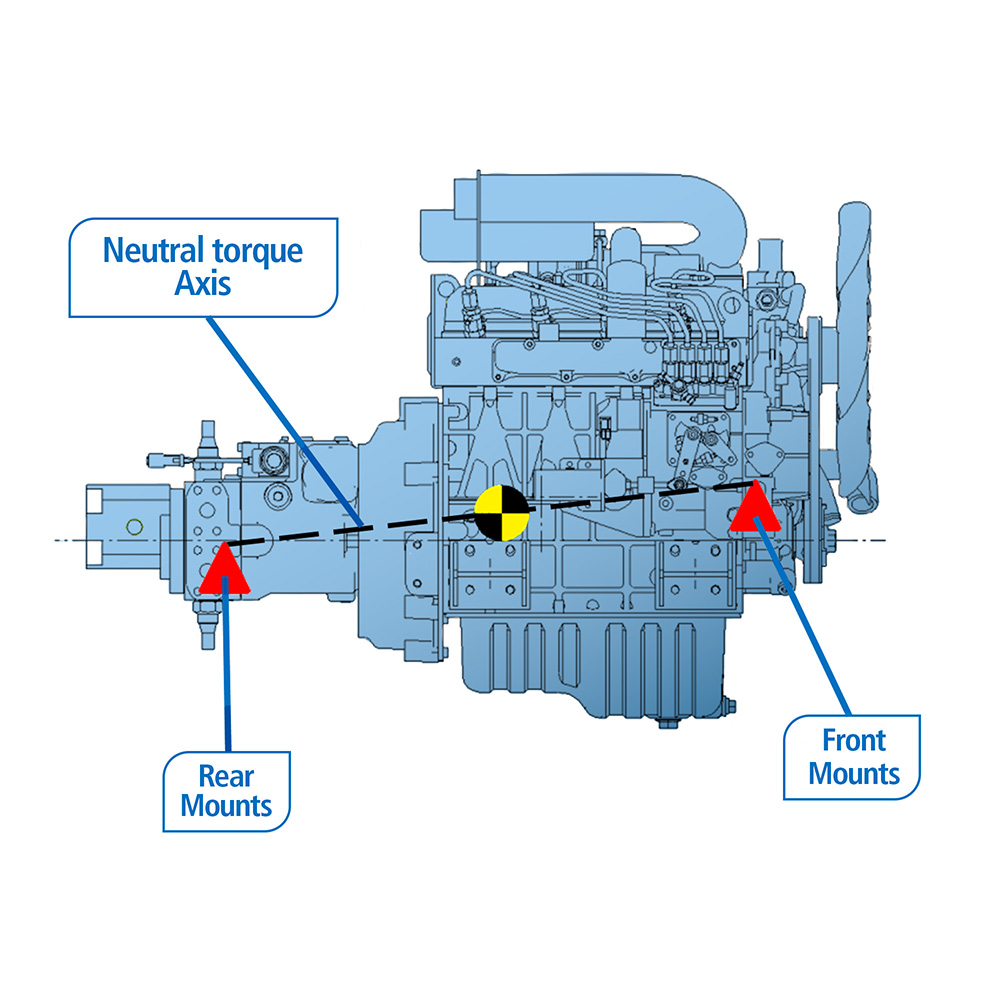
- To minimize the dynamic forces transmitted by the mounts, it is recommended to install the mounts on the imaginary Neutral Torque Axis (NTA), which connects the front & rear mounts with the total center of gravity.
- If the mounts are soft (to minimize the transmitted forces) and they are installed on the NTA, the dynamic forces can be effectively isolated.
SOLUTIONS
The Marine Mounts are conceived to be installed in vertical position. If they are installed angled, the weight of the suspended equipment would create static radial loads, which might make the internal bushing reach the end of stroke, dramatically increasing its stiffness and reducing the vibration isolation.
Due to this, AMC recommends installing Marine Mounts in a vertical position, so the weight of the suspended system acts in the axial direction of the mounts.
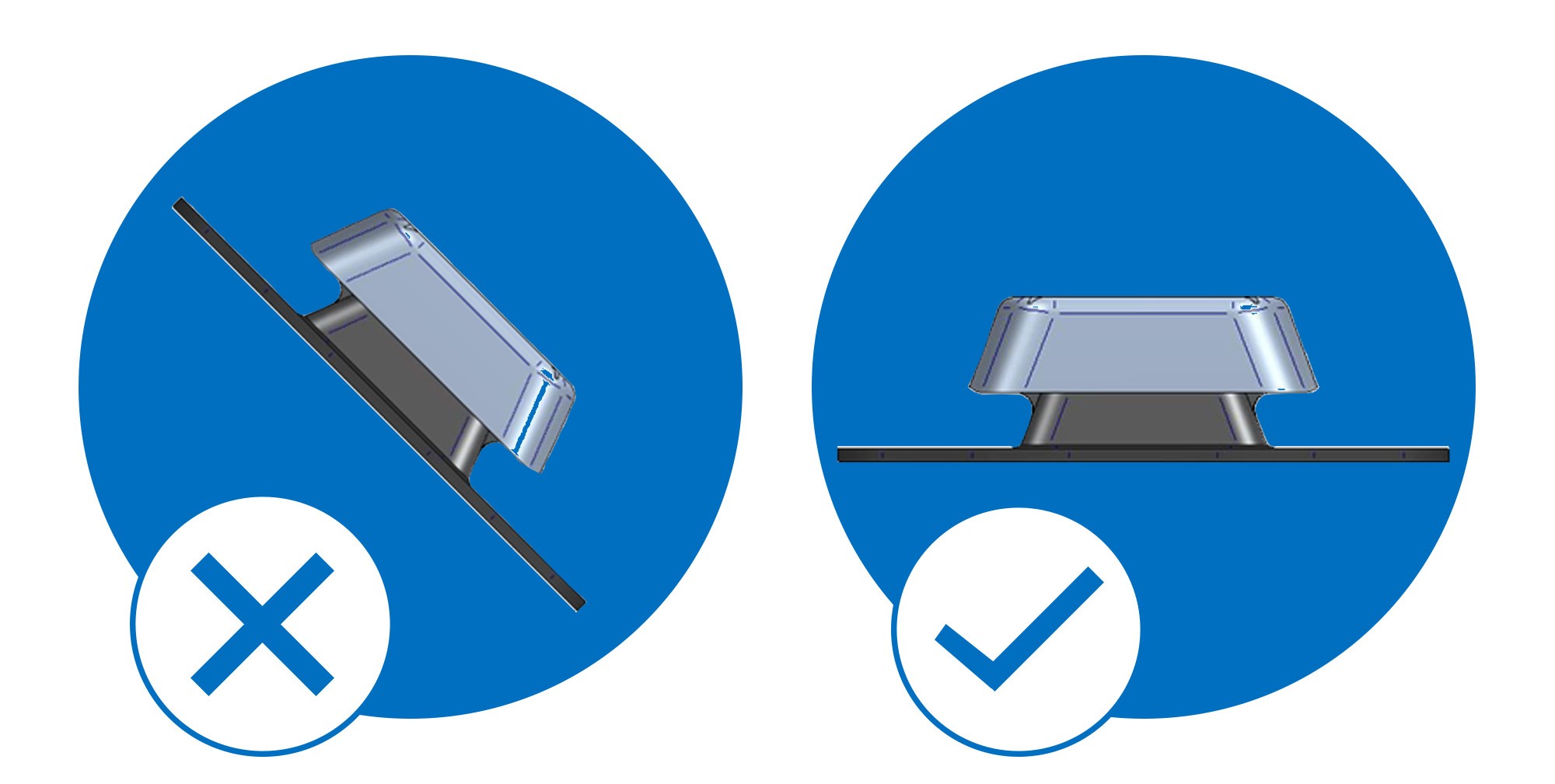
It is important to install the Marine Mounts in vertical position:
- Place the suspended equipment on the mounts, trying to keep the alignment between the anti-vibration mount and the fixation brackets.
- Fastening the mounts misaligned can greatly increase the stiffness of the mount and reduce vibration isolation. It can also produce a hammering effect if the internal bushing reaches the end of stroke.
- Misalignment would also create additional stress on the elastomer, potentially reducing its durability.
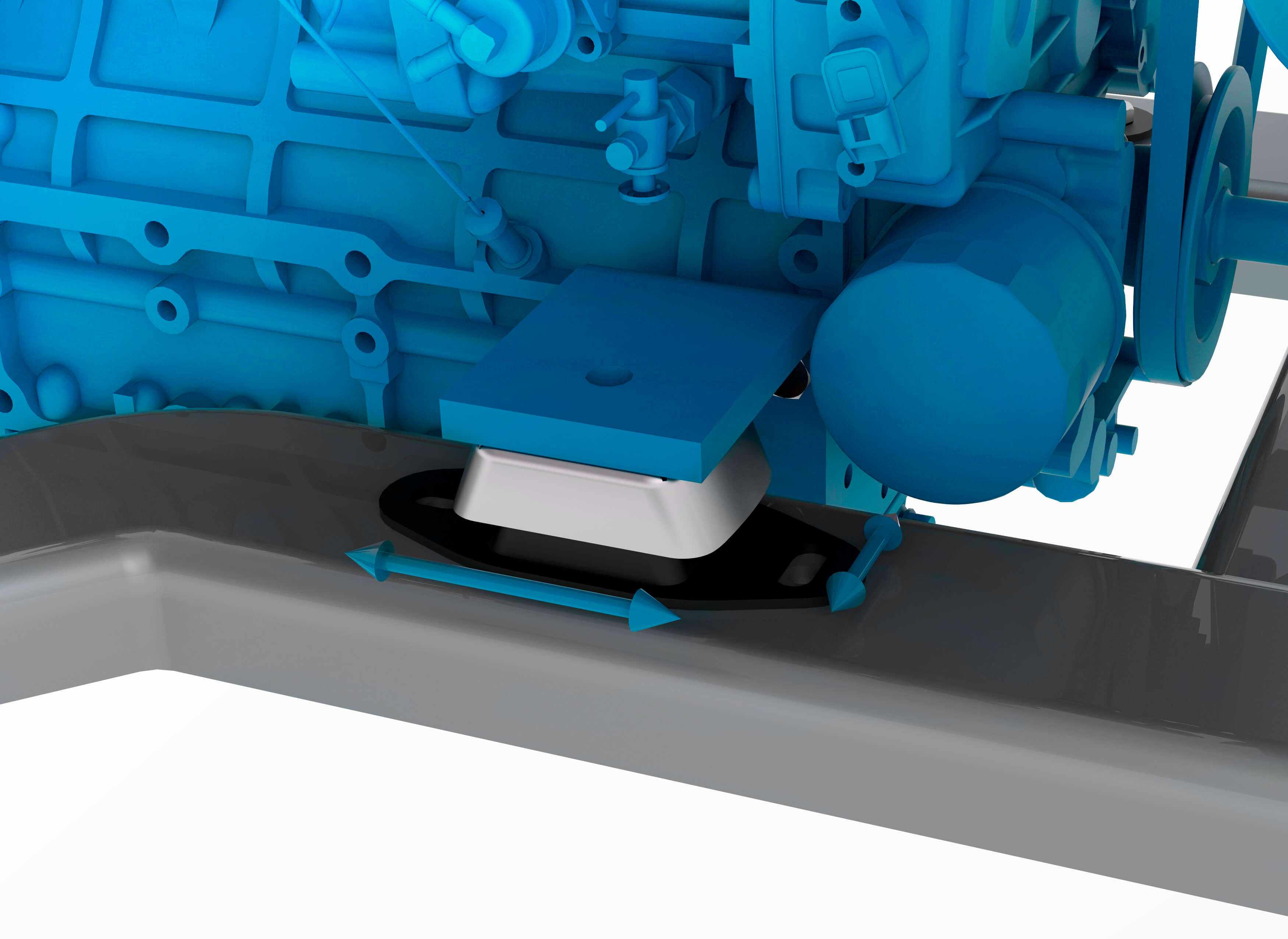
- The slotted holes help to accommodate the position of the Marine Mounts to keep the alignment.
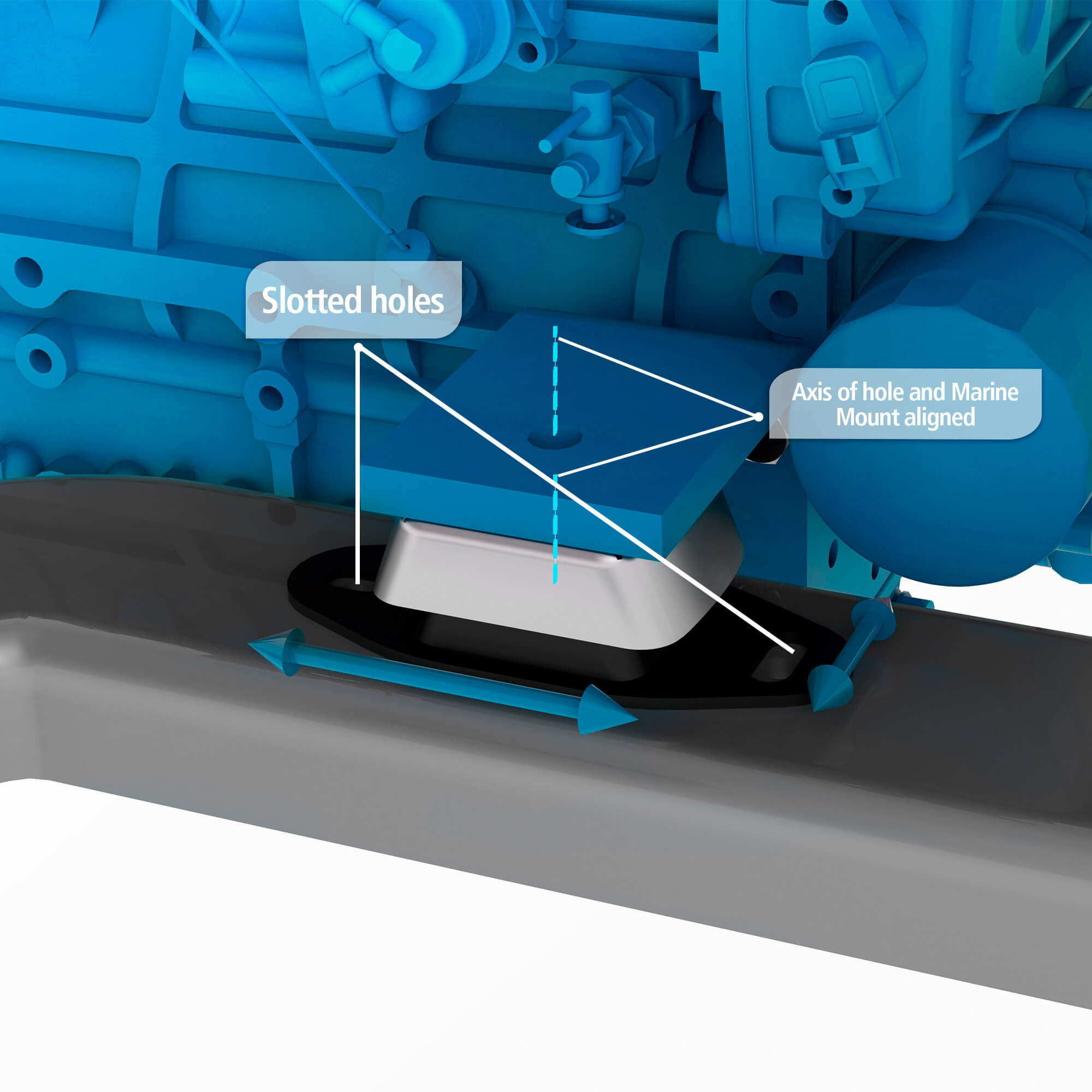
Once aligned, the baseplate of the Marine Mounts can be fastened:
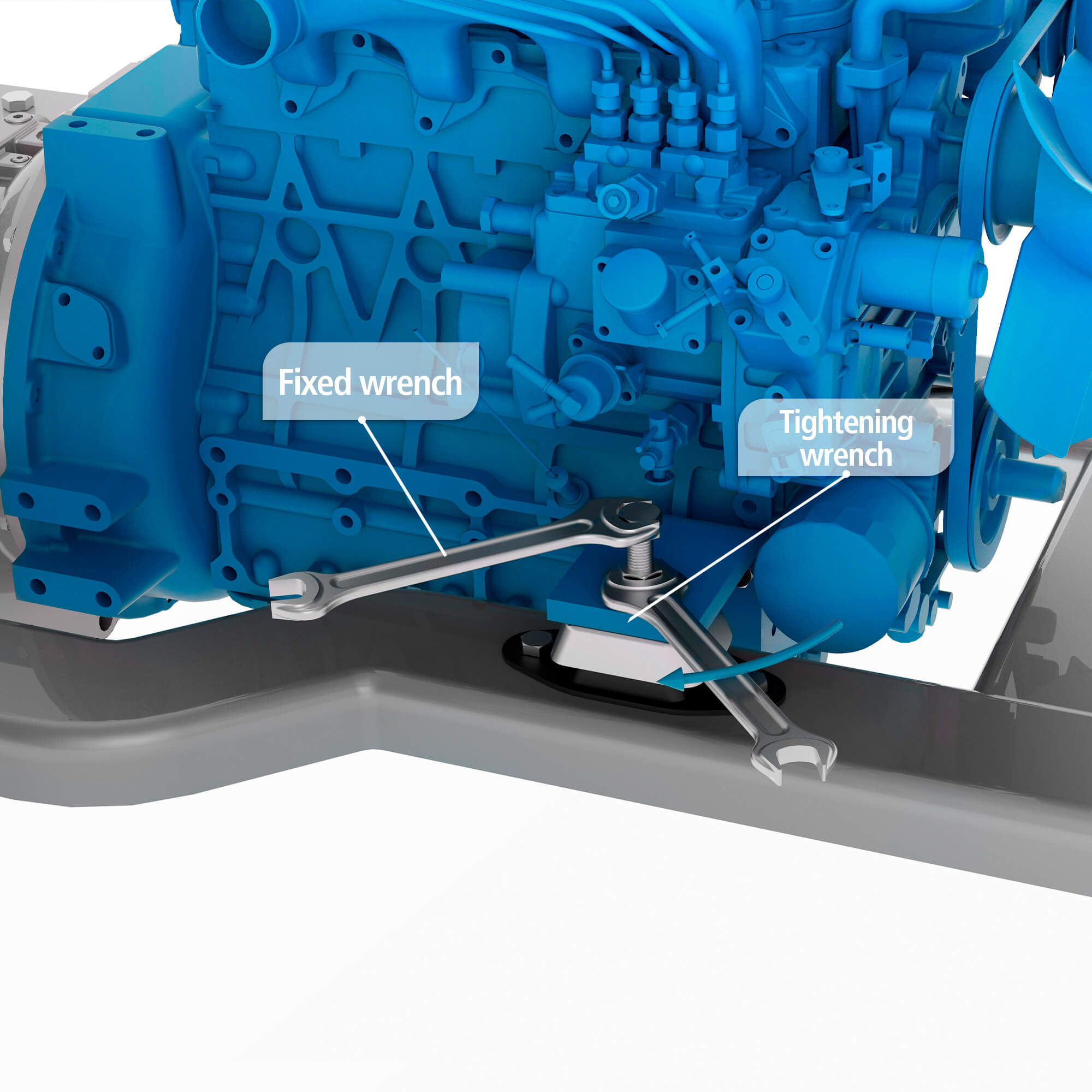
During the fastening of the top screw, it is important not to twist the rubber. Twisting the rubber unnecessarily increases the stress on the rubber and on the bonding surfaces, which might lead to premature cracks or failure of the adhesion between the rubber and the baseplate.
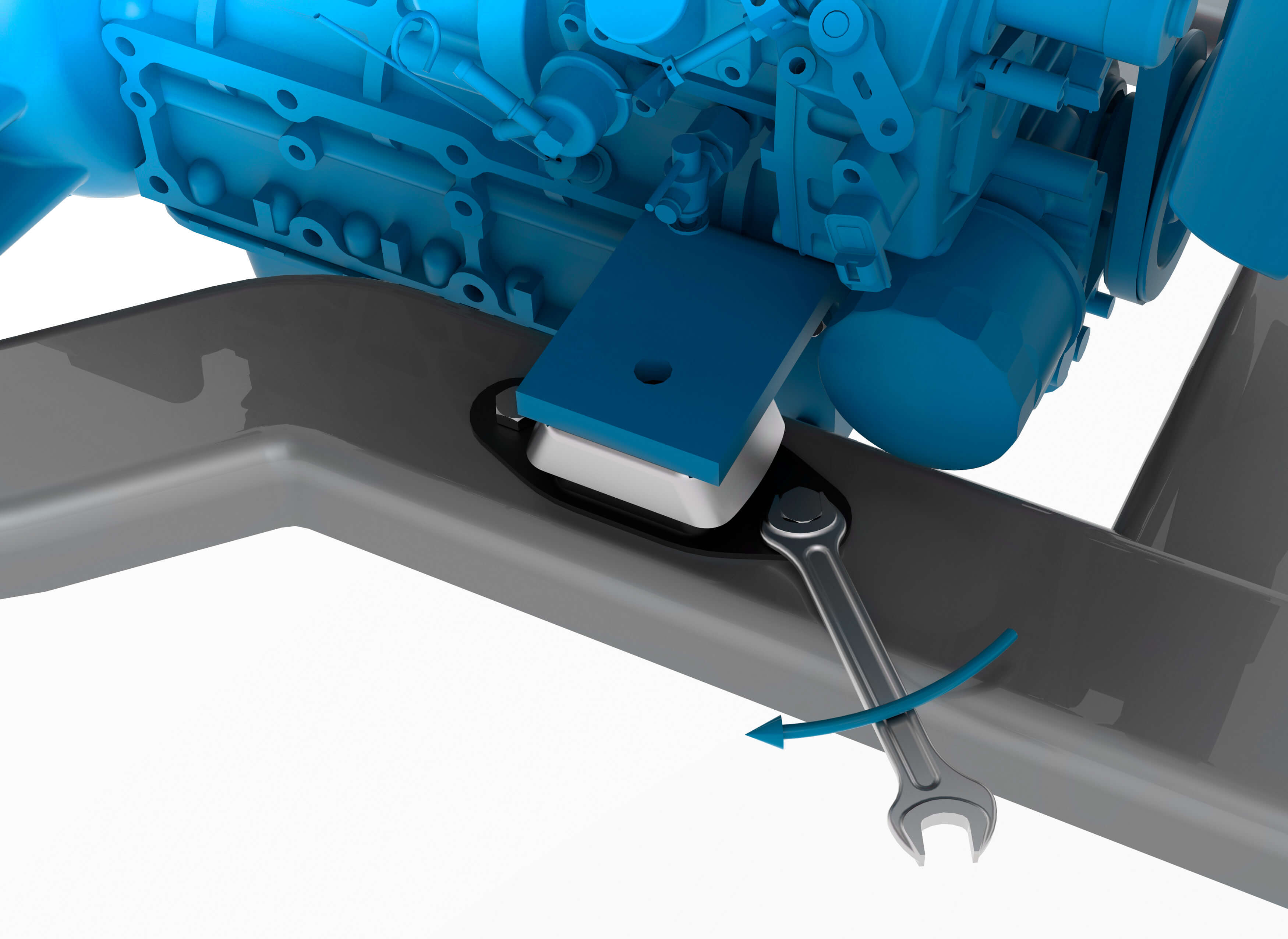
To avoid the twisting of the rubber, there are several methods:
- Sometimes the friction between surfaces is enough to avoid twisting the rubber.
- Tighten the top screw using a pair of bolt-nut. While one wrench holds the bolt, the other can tighten the nut.
Do not hesitate to contact our application engineers for more information on the installation of Marine Mounts.