Anti-vibration mounts Advice of the week: Use of a common frame.
Anti vibration mounts are often installed beneath vibrating machines, this way vibrations and structural noise can be successfully isolated.
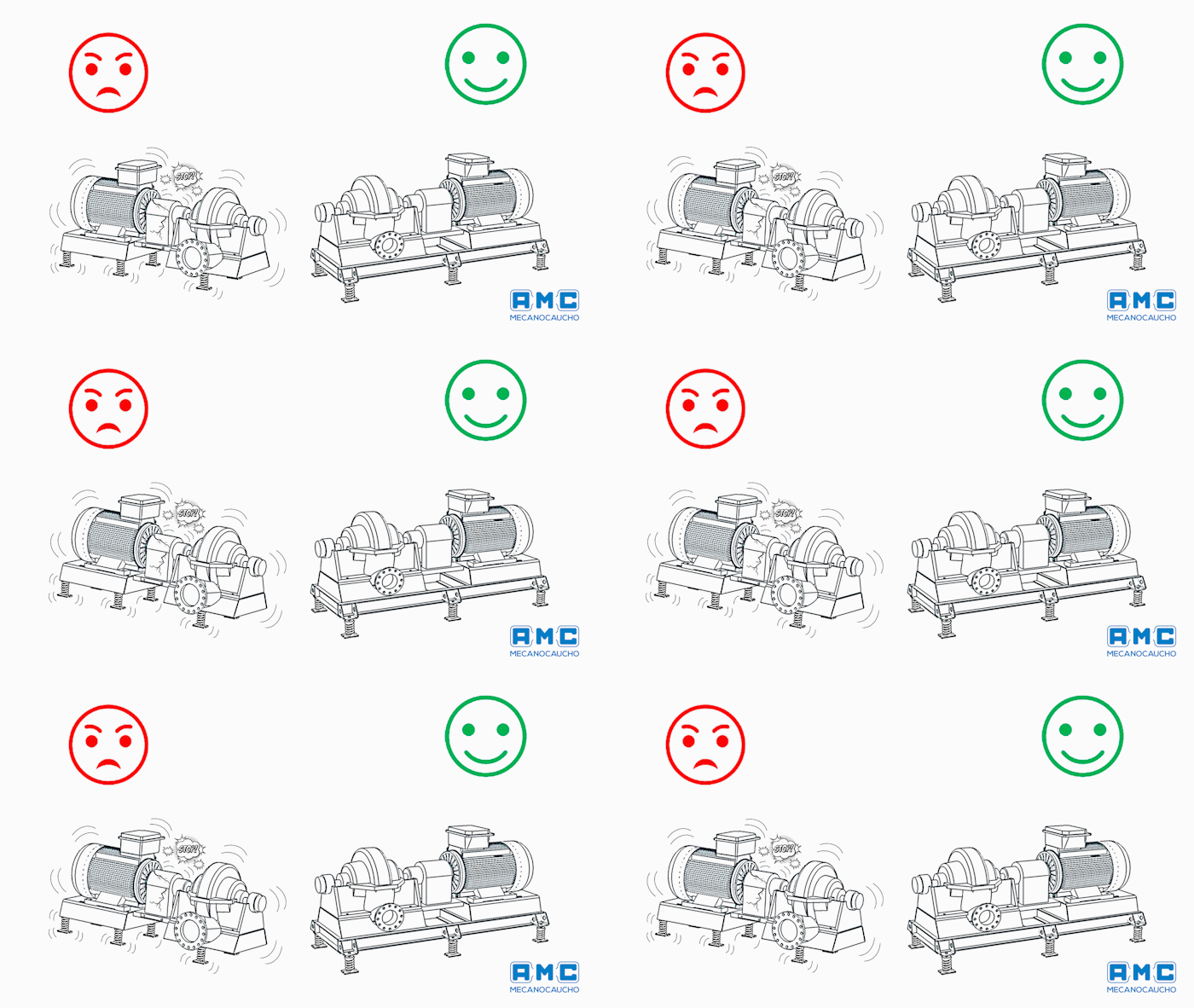
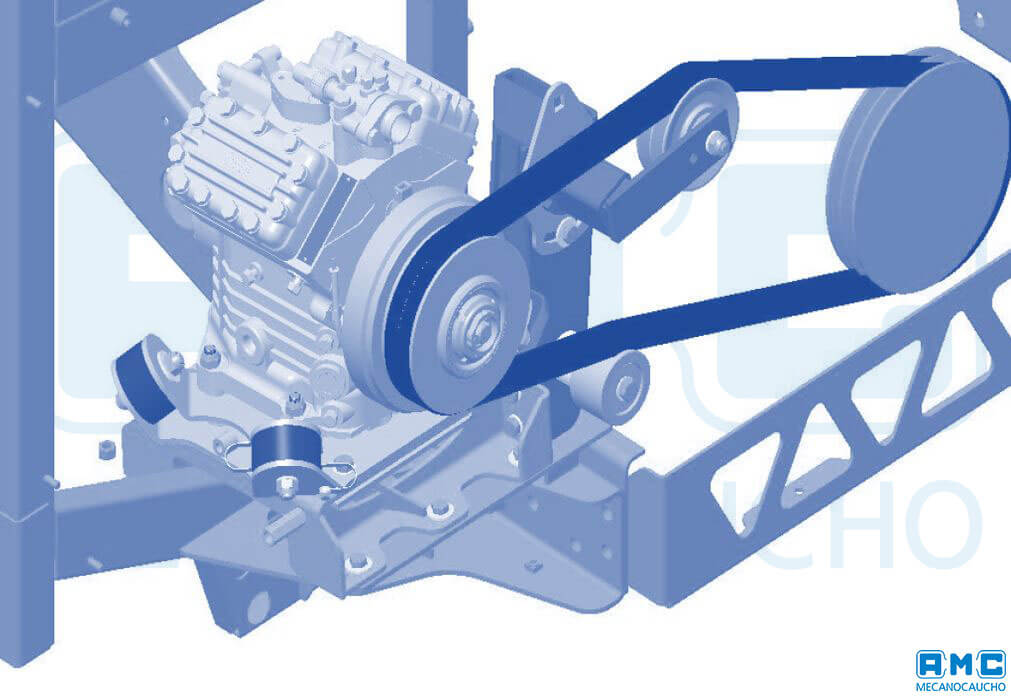
Diesel engines, compressors, generators, fans or pumps may be connected with belts, chains or even elastic couplings. It is a common mistake to install each element with anti vibration mounts, this often leads to making strong conical effect on the mounts wearing them out quickly.
In order to avoid these conical effects, anti vibration mounts are often installed inclined, but mechanical wear makes them change their stiffness causing a loose of tension on the belts.
|
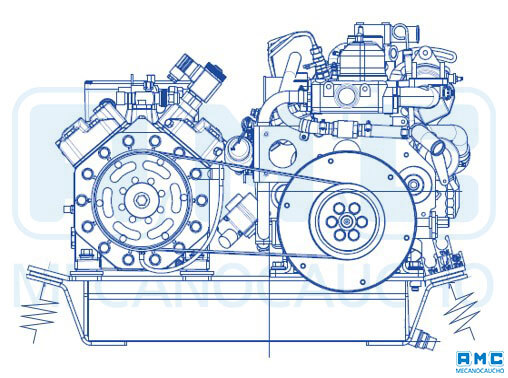
|
| Anti vibration mounts installed in the inclined position is a common practice, but belt pulling forces make the mounts work in a conical angle. This type of work changes the stiffness of the anti-vibration mounts as time goes by. | Anti vibration mounts under a common frame, help avoid uneven belt tensions. Mounts can be installed beneath the common frame without being subjected to conical tensions. Anti vibration mounts offer vibration control and provide great longevity. |
Common frames provide stable installations that offer low wear on anti-vibration mounts.
Other common practice is to use mounts that are too stiff in order to reduce the oscillating movement of the suspended element. But as the stiffness increases (k), the natural frequency also raises, leading to a lower vibration isolation or risk of approaching to the resonant frequency of the system.
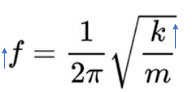
Being on this point many engineers try to find a compromise between stability and isolation. Finding this balance between isolation and stability not durable and very dependent on the stiffness tolerance of the anti-vibration mounts.
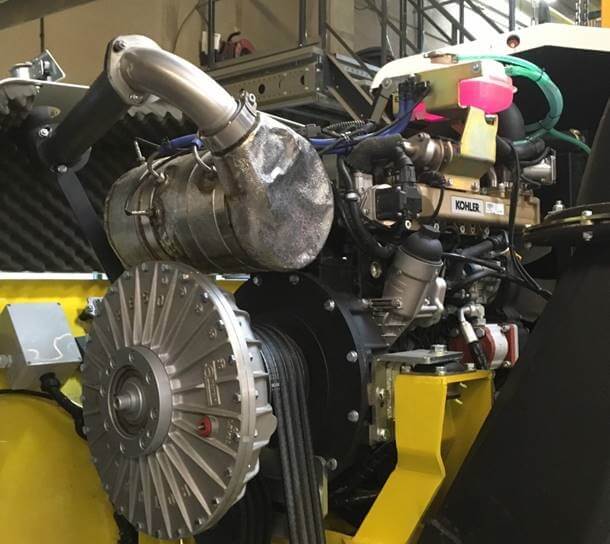
Positioning of the mounts and stiffness ratios of the mounts (horizontally stiff mounts) can help finding a stable and correct vibration isolation level, as shown on the picture below. AMC-Mecanocaucho application engineers may be a point of help in order to predict the movement and vibration isolation.
Should you be interested in this topic do not hesitate to contact our applications engineers. They will be able to help and provide input. Contact form AMC-MECANOCAUCHO® Applications engineers.